
November 12, 2025
Key Signs of Puff Back Damage to Watch For
Top Indicators of Puff Back Damage: How to Identify Furnace and Oil Burner Puff Back Signs
Puff back is a delayed combustion event in oil-fired heating equipment that ejects oily soot, burned fuel odors, and carbon into living spaces, and recognizing it quickly reduces health risks and property loss. This article explains how to identify the most common signs of puff back damage—visual, olfactory, and auditory—so you can document evidence, reduce exposure, and decide when to call a certified restoration team. Rapid identification matters because oily soot adheres to surfaces, contaminates HVAC ducts, and can trigger respiratory irritation; knowing the signs also helps preserve insurance claim validity. Readers will learn what puff back looks and smells like, the mechanical causes behind misfires, how puff back affects property and HVAC systems, prevention and maintenance steps, when to call professionals, and how insurance claims typically work. For immediate, local emergency assistance in New York, Restoration Experts provides 24/7 puff back restoration and works directly with insurers to document damage and expedite recovery. Start by learning the clear, observable indicators that most homeowners and property managers see first.
What Are the Most Common Signs of Puff Back Damage?
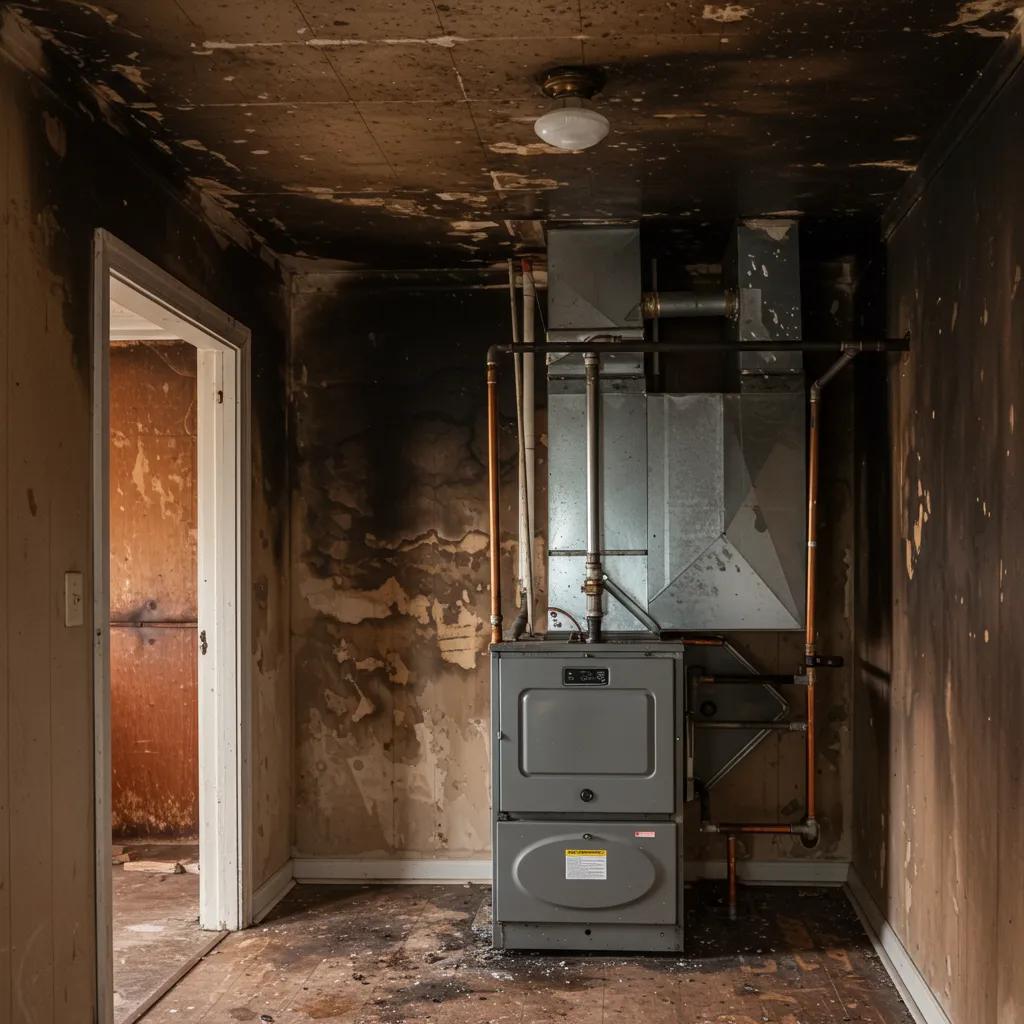
Puff back damage presents consistent, observable signs that result directly from delayed combustion and soot-laden exhaust dispersal. Mechanically, incomplete combustion sprays oily soot particles into the building where they settle on surfaces, cling to textiles, and travel through ductwork—this forms the visual and olfactory evidence described below. Early recognition helps limit cross-contamination, informs immediate safety actions, and creates the photographic records insurers request. The lists and table that follow summarize primary indicators, provide simple inspection steps, and show urgency levels so readers can triage and act.
The top visual, olfactory, and auditory signs include:
- Oily, dark soot deposits on walls, ceilings, and high surfaces that smear when wiped.
- Carbon webbing in corners, near vents, and on ceilings indicating airborne deposition.
- Black residue on vent registers, baseboards, and inside ducts signaling HVAC contamination.
- Persistent burnt oil or fuel-like odors that linger after heater shutdown.
- Unusual furnace noises—popping, banging, or loud misfires—right before or during the event.
These signs point to different contamination zones and risk levels. Inspecting visible deposits and vents first helps determine whether the issue is isolated or system-wide, which guides the next actions.
Intro to the sign comparison table: The following table maps observable signs to indicators and urgency so you can prioritize safety and documentation steps quickly.
| Observable Sign | Typical Indicator | Example Locations |
|---|---|---|
| Oily soot stains | Dark, greasy film that smears | Walls, ceilings, furniture |
| Carbon webbing | Fine, spider-leg patterns in corners | Ceiling corners, high moldings |
| Black residue at vents | Greasy deposits around registers | Supply and return vents, baseboards |
| Burnt oil odor | Persistent fuel-like scent | Boiler room, adjacent rooms, ducts |
| Unusual furnace noises | Popping, banging, delayed ignition sounds | Near furnace, boiler throat, burner unit |
This table provides a quick triage framework that links what you see, smell, or hear to likely contamination zones and urgency for professional response. Use these indicators to photograph evidence and note times and occupant symptoms before contacting restoration or HVAC professionals.
How Do Oily Soot Stains Appear on Walls and Surfaces?
Oily soot stains are a primary visual cue after a puff back and form because unburned hydrocarbons condense on cooler surfaces as airborne soot passes through living spaces. The residue is typically dark brown to black, has a subtle sheen, and smears or transfers when touched, making simple wipes ineffective and often worse. Common deposition patterns include high perimeters near ceilings, upper walls behind furniture, and inside closets where airflow concentrates soot. Because oily soot binds to porous finishes and fabrics, professional cleaning and specialized solvents are often necessary to avoid permanent staining or surface etching.
Surface-specific cleaning difficulty varies by material: painted drywall often requires controlled cleaning with dry chemical sponges followed by targeted wet cleaning, whereas fabrics and upholstered items may need content-specific laundering or dry-cleaning to avoid setting stains. Assessing salvageability early supports better documentation for repairs and insurance estimates. Understanding these differences in material response leads directly to recognizing carbon webbing and airborne deposition patterns described next.
What Is Carbon Webbing and Where Does It Form?

Carbon webbing is a fine, lace-like soot accumulation that forms when soot-laden air follows convective flows and deposits in protected corners and high points, producing visible streaks and web patterns on ceilings and crown molding. The mechanism involves electrostatic attraction and cooler surface temperatures causing ultrafine particles to coalesce into stringy deposits that are more difficult to remove than flat soot films. Typical locations include ceiling-to-wall transitions, corners above doorways, and areas behind high furniture where air movement slows and particles settle. Photographs of carbon webbing are especially useful for insurers because they indicate airborne contamination rather than simple localized stains.
Because carbon webbing reflects suspended-particle deposition, its presence suggests that HVAC ducts or the combustion source dispersed soot broadly, which raises the likelihood of duct contamination and systemic odor issues. Recognizing webbing should prompt a targeted vent inspection and possible HVAC isolation, as described in the next subsection.
Soot Morphology and Internal Structure: Identification of Puff Back Components
From the viewpoint of morphology and internal structure soot collected in exhaust gases of engines and carbon blacks are identical materials. They are made of aggregates of pseudospherical particles; the size of individual particles goes from ca. 10 to 500 nm; a single aggregate can include several tens of particles.
2. The morphology (size and shape) of aggregates can be characterized by electron microscopy, scattering and absorption of light, ultracentrifugation and also adsorption of gases and liquids (pure liquids and solutions).
3. Electron microscopy has been used to give a two dimensional description of aggregates; the development of Quantimets permitted a quantitative description of soot. The third dimension of carbon black aggregates can be investigated by using electron microscopy combined with stereoscopic methods (observation under two different angles).
Morphology and internal structure of soot and carbon blacks, 1981
The detailed structure and morphology of soot particles, as revealed by electron microscopy, explain how these fine aggregates can adhere to surfaces and form intricate patterns like webbing.
How to Recognize Black Residue Around Heating Vents and Registers?
Black residue around registers signals that soot has entered the HVAC distribution system and is being re-circulated; this appears as greasy rings, streaks, or accumulations on vent faces and immediate surrounding trim. A simple inspection step is to remove a register cover carefully, use a clean tissue to do a light wipe test, and note whether the tissue picks up greasy black residue—this helps determine duct involvement. If residue is present inside the duct throat or on the return-side registers, the contamination is likely systemic and requires HVAC cleaning and containment measures. Immediate action should include turning off forced-air circulation to limit spread and documenting deposits with photos and notes.
Venting contamination can persist if the system runs, so isolating and scheduling professional duct cleaning and air-scrubbing is often necessary to restore indoor air quality. Proper inspection of registers supports both remediation scope-setting and insurance paperwork preparation, which is discussed later.
What Are the Typical Burnt Oil or Fuel Odors After a Puff Back?
Burnt oil or fuel odors after a puff back are usually described as acrid, chemical, or petroleum-like and indicate incomplete combustion products and volatile residues in fabrics, ductwork, and structural cavities. Odor persistence reflects the depth of contamination: short-lived smells may point to surface deposits, while long-lasting or saturating odors suggest infiltration into porous materials and ducts that require deodorization. Diagnostic tips include noting where the odor is strongest (near the furnace, in vents, or in distant rooms) and whether odor intensity increases when the HVAC runs, which indicates duct-borne contamination.
Persistent odors often necessitate professional deodorization methods—air scrubbing, thermal fogging, and targeted surface treatments—because household masking agents typically only hide smells temporarily. Recognizing odor patterns also helps differentiate a puff back from routine maintenance smells and supports accurate insurance claim descriptions.
Which Unusual Furnace Noises Signal a Puff Back Event?

Unusual furnace noises that often precede or accompany puff backs include loud popping, banging, or rumbling sounds, which usually indicate delayed ignition, fuel pooling, or rapid pressure changes in the combustion chamber. Mechanically, these noises result from fuel-air mixtures igniting unpredictably after the burner cycles, producing audible combustion pressure pulses that can force soot into occupied spaces. If such sounds are heard, the immediate safety step is to shut down the system, ventilate the area if safe, and avoid operating the furnace until inspected by a technician. Recording the noise timing and any system behavior (pilot light status, control lights) provides critical diagnostic data for technicians and insurers.
Documenting auditory events in combination with visual and olfactory signs strengthens the causal narrative for restoration and claims, and it sets up the mechanism-focused explanations covered in the causes section.
How Does Puff Back Damage Affect Your Home or Business?
Puff back damage impacts property across multiple layers—from superficial finish staining to deep content contamination and HVAC system impairment—creating costs in cleaning, repair, and potential reconstruction. The mechanism is soot deposition across exposed and hidden surfaces, which can cause discoloration, odor entrapment in soft goods, corrosion risk for electronics, and clogged heat exchangers or burners that impair appliance safety. Health risks and reduced indoor air quality often compound the physical damage, meaning property owners must consider both remediation and occupant safety when responding. The following subsections break down property types, health implications, and appliance impacts to guide triage and remediation planning.
The severity of property damage often determines salvage strategies and whether reconstruction is necessary. Understanding types of damage and health implications helps prioritize actions and informs insurer discussions, which are explained later.
What Types of Property Damage Result from Puff Back Incidents?
Puff back incidents cause several distinct property damage types: surface staining of paint and wallpaper, contamination and potential loss of soft goods like drapes and upholstery, soot infiltration into electronics and HVAC components, and possible staining or corrosion of metal fixtures. The mechanism of damage varies by material—porous materials trap oily soot, fabrics may retain odor and staining that is difficult to remove, and sensitive electronics can experience conductive soot deposition that risks malfunction. Salvageability depends on material type and exposure duration; for example, sealed hardwood may be cleaned successfully while heavily saturated textiles may require professional cleaning or replacement.
Documenting item-by-item condition and obtaining professional contents inventories are essential steps to maximize salvage and support insurance claims. This leads naturally into consideration of health risks from exposure to oily soot.
What Health Risks Are Associated with Soot from Puff Back?
Soot from puff back is an oily particulate that can irritate the respiratory system, exacerbate asthma and other pulmonary conditions, and cause eye or throat irritation in sensitive individuals; children, the elderly, and those with pre-existing respiratory disease are at higher risk. The reason is that combustion byproducts include fine particles and volatile organic compounds that are easily inhaled and can penetrate deep into the lungs. Immediate measures include ventilating the space when safe, reducing occupant exposure by vacating affected areas if symptoms occur, and consulting medical guidance for persistent respiratory issues. Professional remediation reduces long-term exposure and helps ensure that re-occupation occurs only after air quality is restored.
Understanding these health impacts underscores why professional containment and documented remediation are often necessary rather than DIY cleanup. Next, consider how appliances themselves are affected and require technical service.
Soot and Ash Particulate Matter from Biofuel and Diesel: Puff Back Implications
Investigation of soot and ash particulate matter deposited in diesel particulate filters (DPFs) operating with biofuel (B100) and diesel (pure diesel: B0 and diesel80/biofuel20blend: B20) by means of optical microscopy, scanning electron microscopy, and high resolution transmission electron microscopy (HRTEM) reveals the following: the rapeseed methyl ester biofuel used for this study contributes to ash production, mainly of Ca–S– and P-bearing compounds ranging in size between 50 and 300 nm. Smaller ash particles are less common and build aggregates. Ash is deposited on the inlet DPF surface, the inlet channel walls, and in B100-DPF at the plugged ends of inlet channels. The presence of Fe–Cr–Ni fragments, down to tens of nanometers in size within the ash is attributed to engine wear. Pt particles (50–400 nm large) within the ash indicate that the diesel oxidation catalyst (DOC) upstream of the DPF shows aging effects. Radial cracks on the coating layer of the DOC confirm this assumption. The B100-DPF contains significantly less soot than B20 and B0. Based on the generally accepted view that soot reactivity correlates with the nanostructure of its primary particles, the length and curvature of graphene sheets from biofuel- and diesel-derived soot were measured and computed on the basis of HRTEM images. The results show that biofuel-derived soot can be more easily oxidized than diesel soot, not only during early formation but also during and after considerable particle growth. Differences in the graphene sheet separation distance, degree of crystalline order and size of primary soot particles between the two fuel types are in line with this inference.
Microscopic investigation of soot and ash particulate matter derived from biofuel and diesel: implications for the reactivity of soot, 2012
The composition and particle size of soot and ash, particularly from biofuel combustion, can influence its deposition and potential health impacts, highlighting the complex nature of puff back contaminants.
How Does Puff Back Damage Impact HVAC and Oil Burner Appliances?
Puff back fouls burners, heat exchangers, ignition assemblies, and duct surfaces with oily soot that impairs combustion efficiency, clogs orifices, and fouls sensors—leading to decreased performance and potential safety hazards. Duct contamination spreads soot throughout the building, and re-circulated particles can deposit on otherwise clean surfaces, restarting exposure cycles. Technicians typically need to inspect burners, replace clogged nozzles or filters, and perform duct cleaning and HVAC system deodorization to fully restore safe operation. Proper documentation of appliance status, service performed, and parts replaced supports both safe return to service and any insurance claims for repair or replacement.
These appliance impacts tie directly to the root causes of puff back events, which we examine in the next major section to help prevent recurrence.
What Causes Puff Back in Furnaces, Boilers, and Oil Burners?
Puff back events have definite mechanical causes that interrupt normal combustion timing or fuel delivery, producing delayed ignition and pressure-driven soot ejection. Common causes include clogged oil nozzles that alter spray pattern, faulty ignition timing, chimney or flue obstructions that reduce draft, oil line leaks creating pooling fuel, and inadequate maintenance that allows wear and residue buildup. Knowing these mechanisms enables targeted prevention and informs whether an incident stems from sudden failure or long-term neglect—important distinctions for safety and insurance outcomes. The following table links causes to mechanisms and practical preventive actions.
| Cause | Mechanism | Preventive Action |
|---|---|---|
| Clogged oil nozzle | Poor atomization causes delayed ignition | Replace nozzles regularly and use proper filtration |
| Faulty ignition system | Delayed or absent spark/pilot causes misfires | Annual ignition checks and prompt repairs |
| Chimney obstruction | Reduced draft leads to backflow of combustion products | Schedule flue inspections and sweeping |
| Oil line leaks | Fuel pooling or improper pressure causes pooling ignition | Inspect lines and fittings; address leaks immediately |
| Lack of maintenance | Accumulated residue and worn parts increase failure risk | Annual tune-ups and documented service records |
How Do Clogged Oil Nozzles Lead to Puff Back Damage?
Clogged oil nozzles disrupt the designed fuel spray pattern, producing larger droplets, uneven atomization, and localized fuel-rich pockets that ignite unpredictably or after a delay, driving soot into occupied spaces. Symptoms include smoky starts, sooty exhaust, and decreased burner efficiency; technicians detect nozzle problems during tune-ups by inspecting spray pattern and combustion readings. Preventive measures include regular nozzle replacement, using quality fuel, and installing or servicing fine filtration to trap particulates that cause clogging. Addressing nozzle issues promptly mitigates the immediate puff back risk and prevents progressive fouling of combustion components.
Recognizing nozzle-related symptoms early contributes to both safer operation and stronger documentation if a puff back occurs, which insurers may evaluate relative to maintenance history.
What Role Does a Faulty Ignition System Play in Puff Backs?
A faulty ignition system—maladjusted timing, worn electrodes, or a weak pilot—can cause delayed ignition where accumulated fuel ignites late, producing a combustion pressure wave that expels soot and burned oil into the building. Detectable signs include erratic pilot operation, intermittent flame, or loud misfires at startup; these are red flags technicians watch for during inspections. Because ignition faults create an immediate safety hazard, professional troubleshooting and replacement of igniters, electrodes, and control modules are recommended to restore predictable startup sequences. Ensuring ignition reliability is a core prevention strategy that links directly to routine maintenance protocols.
These ignition issues often co-occur with nozzle degradation, so comprehensive system checks are necessary to reduce puff back risk.
How Can Chimney Obstructions Trigger Puff Back Events?
Chimney or flue obstructions reduce draft, impairing the natural flow of combustion products and increasing the chance that soot and unburned fuel will be forced back into the building during startup or cycles. Mechanically, poor draft changes combustion air ratios and allows pressure reversals; signs include visible smoke backflow, slow venting, and increased soot on the appliance face. Regular chimney inspection and sweeping remove creosote, bird nests, or debris that impair draft and are recommended on a scheduled basis. Addressing flue issues not only prevents puff backs but also reduces carbon monoxide and other draft-related hazards.
Maintaining flue integrity complements burner and ignition care to provide layered prevention.
Why Does Lack of Furnace Maintenance Increase Puff Back Risk?
Lack of maintenance allows residue accumulation, worn components, and unchecked minor faults to compound into conditions that favor delayed ignition and misfires. Over time filters clog, nozzles degrade, and controls drift out of specification—each incrementally increasing puff back risk. An annual maintenance checklist including nozzle checks, filter replacement, combustion analysis, and control calibration reduces that risk and creates records that support insurance coverage if an incident occurs. Service documentation demonstrates proactive care, which insurers evaluate when distinguishing sudden failure from neglect.
Routine maintenance is therefore both a prevention tool and an important part of risk management for owners and insurers.
How Do Oil Line Leaks Contribute to Puff Back Damage?
Oil line leaks create fuel pooling or irregular fuel pressure that disrupts normal atomization and can produce local fuel-rich conditions that ignite unpredictably. Detection clues include fuel odors, stains near the burner or along piping, and unexpected drops in fuel pressure. Immediate safety steps for suspected leaks include shutting off the fuel supply and ventilating the area if safe, followed by contacting an HVAC technician to repair lines and test for contamination. Prompt leak remediation prevents not only puff back events but also environmental hazards and equipment damage.
Detecting and repairing leaks quickly reduces both immediate hazard and the likelihood of repeated puff back occurrences.
When Should You Call a Professional for Puff Back Damage Restoration?
You should call a professional restoration team immediately when you observe persistent soot dispersal, strong fuel odors, HVAC blowing soot, or occupants experiencing respiratory symptoms—these are emergency indications of system-wide contamination. Certified technicians respond with containment, HVAC isolation, soot removal, air scrubbing, and documentation to restore healthful conditions and to support insurance claims. For urgent recovery in New York, Restoration Experts offers 24/7 emergency response with certified technicians who coordinate with insurers and provide a free initial damage estimate by phone. The checklist and process overview below help triage incidents and clarify when professional intervention is essential.
Calling professionals quickly minimizes cross-contamination, protects occupants, and preserves evidence necessary for claims and repairs, which the following table helps clarify.
| Damage Type | Severity Indicator | Recommended Response |
|---|---|---|
| Heavy visible soot | Widespread oily deposits and smearing | Immediate professional containment and cleanup |
| HVAC blowing soot | Registers emitting black residue or odor | Shut off HVAC and schedule duct cleaning by pros |
| Persistent odor | Strong fuel smell after ventilation | Professional deodorization and source remediation |
| Occupant symptoms | Respiratory distress or irritation | Evacuate and call emergency restoration and medical help |
What Are the Emergency Signs That Require Immediate Restoration Help?
Emergency signs include a persistent fuel or burnt oil odor that does not dissipate with ventilation, active HVAC systems blowing soot particles, visible heavy soot covering multiple rooms, or occupants experiencing breathing difficulty. These indicators suggest systemic contamination or ongoing combustion hazards that make DIY cleaning unsafe and ineffective. Immediate steps are: shut off the heating system if safe to do so, ventilate the space without running the HVAC, evacuate occupants with symptoms, and contact an emergency restoration provider for containment and assessment. Documenting the scene with photos and notes on symptom timing enhances the restoration team’s ability to scope work and helps with insurance documentation.
Recognizing these red flags reduces health exposure and limits the area of contamination, which supports quicker remediation and prevents escalation.
How Do Certified Technicians Safely Remove Soot and Odors?
Certified technicians follow a methodical process: establish containment to prevent cross-contamination, isolate HVAC systems, remove loose soot with HEPA vacuums, clean surfaces with dry and wet methods tailored to material, and deploy air scrubbing and deodorization (thermal fogging or specialized chemical neutralizers) as needed. Safety protocols include PPE, controlled waste handling, and testing to confirm air quality before re-occupancy. Technicians also photograph conditions and produce detailed scope-of-work reports and estimates to help property owners and insurance adjusters understand costs. This professional approach reduces the risk of missed contamination and long-term odor persistence compared with DIY attempts.
Comprehensive documentation and safe techniques are essential to both occupant safety and successful claim outcomes, which restoration partners facilitate.
Why Is Professional Restoration Essential for Health and Property Safety?
Professional restoration is essential because incomplete cleanup leaves oily soot residues that continue to off-gas, re-deposit, and impair air quality, risking chronic odors and health symptoms. Restoration professionals use specialized equipment and protocols to remove deep-seated contamination from surfaces, ducts, and contents while protecting unaffected areas from cross-contamination. The cost-benefit analysis favors professional remediation when factoring in reduced rework, lower long-term health risks, and stronger insurance claim support through certified reports. Restoration Experts’ certified teams provide emergency response and documentation services that help clients safely restore space and coordinate with insurers for claims processing.
Effective professional remediation prevents recurring odor and contamination cycles and supports safer, faster restoration to occupied use.
How Can You Prevent Puff Back Damage in Your Heating System?
Preventing puff back centers on scheduled preventive maintenance, prompt repairs of combustion and fuel-delivery components, and proper chimney and vent upkeep to preserve draft. Regular attention prevents fuel atomization issues, ignition timing errors, and flue blockages that create delayed ignition events. The maintenance checklist and best practices below outline the specific tasks homeowners and managers should adopt to lower risk. Implementing these steps also creates a maintenance record that supports insurance coverage in case of incidents.
A proactive maintenance regimen reduces both the likelihood and the severity of puff back events, making systems safer and more reliable over time.
Recommended annual and seasonal maintenance practices include:
- Replace oil nozzles and clean burners annually to ensure proper atomization and combustion.
- Change fuel filters and inspect fuel lines for leaks to preserve steady fuel delivery.
- Perform combustion analysis and calibration to verify correct air-fuel ratios and ignition timing.
- Schedule chimney/flue inspection and sweeping to maintain draft and remove obstructions.
Following these steps keeps combustion predictable and reduces conditions that lead to puff back. Maintaining records of each service appointment strengthens your position with insurers if a claim becomes necessary.
What Are the Recommended Annual Maintenance Practices for Oil Burners?
Annual oil burner service should include nozzle replacement, filter changes, burner and combustion chamber cleaning, and a combustion efficiency check to confirm correct air-to-fuel ratio. Technicians inspect ignition assemblies, pressure settings, and safety controls while testing for leaks and drafting issues. Homeowners should request and retain a service report documenting tasks performed, parts replaced, and combustion readings; this documentation is useful for both safety assurance and insurance purposes. Scheduled service reduces the likelihood of misfires and puff back by keeping all critical components within specification.
Keeping a file of annual service records also demonstrates proactive maintenance when discussing claims with insurers.
How Does Regular Furnace Inspection Reduce Puff Back Risks?
Regular furnace inspections catch worn or drifting components—such as degraded electrodes, fouled nozzles, and clogged filters—before they produce delayed combustion or misfire events. Technicians can identify early signs of soot buildup, draft irregularities, and control malfunctions that escalate into puff back incidents. Homeowners can perform simple checks between services, including observing startup behavior and noting unusual smells or noises, and escalate to professional inspection on any deviation. Prompt repairs indicated by inspections maintain safe operation and prevent small defects from causing system-wide contamination.
Consistent inspection cycles form a preventive backbone that protects both safety and property value.
What Are the Best Practices for Chimney and Vent Cleaning?
Best practices for chimney and vent maintenance include annual professional sweeping for active oil-fired systems, inspection of flue liners and caps for damage or debris, and verification that vent terminations are clear of obstructions and appropriate for prevailing conditions. Certified chimney sweeps use mechanical and video inspection tools to detect creosote, nests, or flue deterioration that impair draft. Maintaining vent caps and clearances reduces the likelihood of downdrafts and backflow that can precipitate puff back events. Employing qualified, certified chimney professionals ensures that cleaning is comprehensive and documented for records.
Proper vent maintenance complements burner upkeep to maintain safe combustion dynamics and reduce puff back risk.
How Can Upgrading Heating Equipment Help Prevent Puff Backs?
Upgrading to modern burners, improved ignition systems, and sealed-combustion units can reduce puff back risk by providing more precise fuel delivery, reliable ignition timing, and minimized pathways for combustion products to enter indoor spaces. Newer controls and diagnostics detect and correct inefficient operation before incidents occur, and sealed combustion reduces draft sensitivity to external conditions. When repeated puff back events occur or equipment is aging, replacement may be more cost-effective than recurring repairs. Evaluating upgrade options with a qualified HVAC professional yields both safety and efficiency benefits.
Deciding between repair and replacement should weigh age, frequency of failures, and lifecycle costs to determine the most resilient strategy.
How Does Insurance Coverage Work for Puff Back Damage?
Puff back damage may be covered by homeowners or commercial property insurance depending on policy language, cause determination, and maintenance history; coverage commonly applies when the event is sudden and accidental rather than the result of neglect. Insurers evaluate whether the puff back resulted from an unforeseen mechanical failure or from lack of maintenance, and they request documentation—photos, service records, and professional reports—to establish cause and scope. Restoration companies can assist by producing scope-of-loss estimates, contents inventories, and remediation reports that streamline adjuster review. The following Q&A-style guidance clarifies typical coverage expectations and documentation needs.
Understanding the conditional nature of coverage emphasizes the importance of immediate documentation and service records, which restoration teams can help generate.
Is Puff Back Damage Typically Covered by Homeowners Insurance?
Yes—puff back is often covered when policies classify the event as sudden and accidental smoke or soot damage, but coverage may be denied if insurers determine the loss resulted from negligence or lack of required maintenance. Key conditional scenarios include sudden mechanical failure (often covered) versus long-term neglect (often excluded). Policy wording varies, so presenting evidence of recent maintenance and immediate remediation helps support coverage. Documenting service history and obtaining professional restoration reports increases the likelihood of a favorable claim outcome.
Clear documentation of proactive maintenance and quick professional response typically strengthens a covered-loss case.
What Documentation Is Needed to File a Puff Back Insurance Claim?
Insurers commonly request time-stamped photos and video of stains and soot, a written account of events and actions taken, technician service records and invoices, a professional restoration scope-of-work and estimate, and any HVAC maintenance history. A downloadable checklist is useful for claim preparation, and restoration firms often assist in assembling these materials to ensure completeness. Keeping copies of emergency call logs, initial containment actions, and medical notes if occupants experienced symptoms further supports the claim. This documentation package accelerates adjuster validation and improves the accuracy of loss estimates.
Having a complete documentation set from the outset reduces friction with adjusters and speeds reimbursement.
How Do Insurance Companies Assess Puff Back Damage Claims?
Adjusters typically follow a process of inspection, cause determination, scope quantification, and estimate review—looking for evidence that the loss was sudden and not attributable to neglect. They rely on professional reports for technical cause analysis, photos for visual confirmation, and maintenance records to evaluate responsibility. Restorers and HVAC technicians who provide clear, itemized reports and pre-loss service documentation help align the restoration scope with coverage parameters. Timely notification and documented mitigation actions also influence claim outcomes positively.
Understanding the adjuster workflow enables property owners to provide exactly the information required for efficient claim processing.
When Can Insurance Deny Coverage Due to Negligence?
Insurance carriers may deny claims when evidence shows failure to perform recommended maintenance, ignored repair notices, or long-term neglect that directly contributed to the puff back event. Examples include absent annual burner service, known leaking oil lines left unrepaired, or fuel equipment clearly beyond expected service life without documented mitigation. To contest a denial, present documented maintenance history, prompt repair records, and professional remediation reports that demonstrate reasonable care. Proactive recordkeeping and using certified restoration services for emergency response reduces the chance of denial and supports appeals when needed.
Clear, contemporaneous service records and rapid professional intervention are the strongest defenses against negligence-based denials.
What Are the Visual and Auditory Signs of Furnace Puff Back Damage?
Furnace-specific puff back signs include concentrated soot on furnace faceplates, heat exchanger discoloration, soot within burner compartments, and deposits concentrated around supply registers serving furnace zones. Auditory signs for furnaces mirror general puff back noises—loud popping or banging at startup—but furnace systems may also produce cyclical belching sounds associated with pressure surges in the combustion chamber. Identifying furnace-specific patterns helps technicians isolate the combustion source, determine needed repairs such as nozzle replacement or combustion chamber cleaning, and scope HVAC remediation. The inspection checklist below aids furnace owners in targeted assessment.
A focused furnace inspection narrows down likely causes and recovery steps, minimizing unnecessary work and accelerating safe return to service.
How to Identify Soot Damage Specific to Oil Furnaces?
Soot on oil furnaces often appears as concentrated dark deposits around the burner assembly, heat exchanger seams, and adjacent cabinetry or flooring, and can transfer when touched. Inspecting the burner compartment and access panels after a shutdown often reveals the highest concentration of soot and provides clues about combustion irregularities. Heat exchanger discoloration or soot accumulation can indicate performance degradation and potential safety concerns that require technician evaluation. Recording these furnace-specific findings and including them in the restoration report helps prioritize appliance service and duct cleaning tasks.
Noting the precise furnace locations of soot accumulation helps technicians tailor repairs and supports accurate insurance estimates.
What Furnace Noises Indicate a Puff Back Event?
Key furnace noises include sharp pops or bangs on ignition, a notable belch or hiccup in the burner cycle, and rumbling that suggests delayed combustion and pressure pulses inside the combustion chamber. Each sound correlates with a mechanical cause—pops with delayed ignition, belches with fuel pooling, and rumbling with severe misfires—and should prompt immediate system shutdown and professional inspection. Homeowners should log the timing and description of sounds and avoid restarting the furnace until a qualified technician confirms safe operation. This precaution reduces the risk of repeated contamination and equipment damage.
Documenting auditory events alongside visual and olfactory evidence creates a robust incident record for both remediation and claims.
How Does Puff Back Affect Furnace Air Vents and Registers?
Furnace-driven puff back deposits soot on supply registers and grilles, reducing airflow and re-circulating contamination through living spaces, which degrades indoor air quality until ducts are cleaned. Inspecting registers for greasy deposits and performing a tissue wipe test can quickly indicate duct involvement; if the HVAC redistributes soot, professional duct cleaning and system deodorization are typically required. Restorers often coordinate with HVAC technicians to ensure both distribution components and the furnace are restored to safe operation. Addressing vent contamination promptly restores airflow efficiency and reduces secondary contamination of cleaned areas.
When furnace vents are affected, combined HVAC and structural remediation yields the most complete recovery and prevents recurring odor or residue issues.
This article provides the technical signs, causes, prevention strategies, immediate triage steps, and insurance documentation guidance property owners and managers need to identify and respond to puff back events effectively. For urgent restoration assistance and insurance coordination, Restoration Experts offers 24/7 emergency response, certified remediation teams, and dedicated claim documentation support—call (631) 588-1110 for immediate help or to request a free estimate for puff back damage restoration.
Frequently Asked Questions
What preventive measures can I take to avoid puff back damage?
To prevent puff back damage, regular maintenance is crucial. Schedule annual inspections for your heating system, including oil burner and chimney checks. Replace oil nozzles and filters, and ensure proper fuel delivery to avoid clogs. Additionally, keep the chimney and flue clear of obstructions to maintain proper draft. Documenting maintenance activities can also support insurance claims if an incident occurs. By being proactive, you can significantly reduce the risk of puff back events and ensure your heating system operates efficiently.
How can I tell if my HVAC system is affected by puff back?
If your HVAC system is affected by puff back, you may notice black residue around vents, unusual noises from the furnace, or persistent burnt oil odors. Conduct a visual inspection of the registers and ducts for soot deposits. If you observe any of these signs, it’s essential to turn off the HVAC system to prevent further contamination and contact a professional for a thorough inspection and cleaning. Early detection can help mitigate health risks and property damage.
What should I do if I suspect puff back damage?
If you suspect puff back damage, take immediate action by shutting off your heating system to prevent further soot dispersal. Ventilate the area if it is safe to do so, and avoid using the HVAC system until it has been inspected. Document any visible signs of damage, such as soot stains or odors, and contact a certified restoration team for professional assessment and remediation. Quick action can help minimize health risks and support any insurance claims you may need to file.
Are there specific health risks associated with puff back exposure?
Yes, exposure to soot from puff back can pose several health risks, particularly for sensitive individuals such as children, the elderly, and those with pre-existing respiratory conditions. Inhalation of oily soot can lead to respiratory irritation, exacerbate asthma, and cause eye or throat discomfort. If occupants experience symptoms like coughing or difficulty breathing, it’s crucial to evacuate the area and seek medical advice. Professional remediation is essential to restore safe air quality and reduce long-term health risks.
How does insurance coverage typically work for puff back damage?
Insurance coverage for puff back damage varies by policy but often includes protection for sudden and accidental damage caused by puff back events. Insurers will assess the cause of the incident, looking for evidence of maintenance and prompt remediation. To support your claim, document all damage with photos, keep service records, and obtain professional restoration reports. Understanding your policy details and maintaining thorough documentation can significantly improve your chances of a successful claim.
What are the signs that indicate I need to call a professional for puff back issues?
Signs that indicate the need for professional help include persistent fuel or burnt oil odors, visible soot accumulation in multiple areas, and HVAC systems blowing soot particles. If occupants experience respiratory symptoms, it’s crucial to evacuate the area and contact a restoration team immediately. These signs suggest systemic contamination that requires expert intervention to ensure safety and effective remediation. Quick action can help prevent further damage and health risks.
Conclusion
Recognizing and addressing puff back damage is crucial for maintaining a safe and healthy living environment. By understanding the signs and taking prompt action, homeowners can mitigate health risks and protect their property from further damage. For immediate assistance, reach out to our certified restoration team to ensure thorough remediation and support for your insurance claims. Don’t wait—contact us today to safeguard your home and well-being.