
November 7, 2025
Essential Puff Back Cleanup Steps for Optimal Results

Essential Steps for Professional Puff Back Cleanup Success: Complete Guide for Furnace Puff Back Damage Restoration
A furnace puff back is a sudden release of oily soot and combustion byproducts when an oil-fired burner experiences ignition failure and accumulated fuel ignites abruptly. This guide explains why prompt, professional puff back cleanup matters, outlines puff back cleanup steps, and shows homeowners and property managers how to limit damage, document losses, and restore indoor air quality. Readers will learn to recognize furnace puff back causes, take immediate safety actions, work with restoration professionals, and navigate insurance coverage for puff back incidents. The article covers how professional soot removal services and HVAC soot removal are performed, how contents and structural repairs are handled, and preventive maintenance practices to reduce recurrence. Throughout, practical checklists, comparison tables of techniques, and an insurance documentation toolkit are provided to support rapid decision-making during an emergency furnace cleaning or oil burner soot cleanup.
What Is a Furnace Puff Back and What Causes It?
A furnace puff back is a combustion failure event in an oil burner that allows fuel or soot to accumulate and then combust suddenly, dispersing oily soot throughout a building. The mechanism is incomplete ignition followed by delayed combustion, which propels fine, sticky soot into living spaces and HVAC systems, creating widespread contamination and odor. Understanding these furnace puff back causes helps prioritize preventive maintenance and immediate mitigation to reduce long-term restoration costs. Recognizing the difference between a puff back and normal combustion anomalies is essential to decide when to call professional soot removal services. The following subsections describe the event sequence, common mechanical causes, and the physical impact of soot on property and materials.
What Happens During a Puff Back Event?
A puff back begins with ignition failure or poor atomization of fuel, allowing unburned oil and soot to build up in the combustion chamber or flue; subsequent ignition sends that buildup into occupied spaces. This sequence typically unfolds in a few fast steps: ignition failure, fuel accumulation, sudden combustion, and soot dispersal through vents and return air. Homeowners may notice a loud bang, oil smell, visible black soot on surfaces, and HVAC system contamination immediately after the event, signifying broad airborne and surface deposition. Early recognition of these signs improves outcomes because quick containment and professional mitigation reduce staining and prevent HVAC recontamination. Understanding the event mechanics leads directly into identifying the root causes to prevent recurrence.
What Are the Common Causes of Furnace and Oil Burner Puff Backs?
Common causes of puff backs include clogged nozzles, faulty ignition systems, poor burner timing, and neglected maintenance that allows soot and unburned fuel to accumulate. Clogged nozzles alter fuel spray patterns, producing larger droplets and incomplete combustion that form oily soot; similarly, worn igniters or delayed ignition timing permit fuel build-up. Operational errors, such as restart attempts after a misfire without proper purge, can also precipitate a puff back, as can oil-quality issues or irregular burner adjustments. Addressing these mechanical and maintenance-related causes through scheduled inspections and professional service reduces the likelihood of sudden puff back events. These preventative measures tie directly into the maintenance checklist later in this guide.
How Does Puff Back Soot Affect Your Property?
Puff back soot is oily, acidic, and highly adherent, which makes it prone to staining and substrate damage if not removed quickly and correctly. The oily component binds to textiles, paints, electronics, and porous materials, often requiring specialized degreasing and surface treatments to avoid etching and permanent discoloration. Beyond visible staining, soot impregnates HVAC ducts and filters, leading to persistent odors and redeposition on cleaned surfaces if systems are not addressed concurrently. The longer soot residues remain, the greater the risk of persistent odor and higher restoration costs due to required sealants, priming, or reconstruction. Prompt assessment and appropriate remediation steps reduce long-term material degradation and restore indoor air quality more effectively.
Soot Particles: Formation, Health Effects, and Toxicity Mechanisms
1. This review summarizes the current knowledge (definition, source, formation, structure, chemical composition, and health effects) about atmospheric soot particles and aims to analyze their health effects combined with their structural characteristics.
2. The new understanding of soot microstructure (analogous to reduced graphene oxide (RGO)) suggests the presence of oxygen-containing functional groups (OFGs) in carbonaceous core (CC) of soot, which may enhance its health effects. Toxicological studies have proved that the two major components (CC and outer coating) both contribute to soot toxicity, but there is still controversy over who is playing the main role. Recently, there are many studies questioning the past experimental results. The bioavailability of the outer coating bound on CC is particularly pointed out to be taken into account for soot toxicity. Existing epidemiological studies on black carbon (BC), a near-synonym of soot in atmospheric science, have prompted the adverse health effects especially for cardiovascular system. A stronger association between short term BC exposure and health endpoints is lately found than fine particulate matter (PM2.5), but still needs more consistent evidence. Therefore, the health effects of soot need more attention as well as comprehensive and in-depth research.
3. It is evident from the review that soot is a responsible agent for adverse health effects, which may exceed PM2.5. The CC and outer coating have been proved to exert toxicity separately, of which oxidative stress, inflammation, and DNA damage are most important toxicity mechanisms. However, their antagonistic interaction may weaken the toxicity of the whole soot particle.
Origin, structural characteristics, and health effects of atmospheric soot particles: A review, J Shang, 2024
What Are the Immediate Actions to Take After a Puff Back?

Immediate actions after a puff back focus on occupant safety, system shutdown, containment, and documentation to support recovery and insurance claims. Acting quickly limits soot spread, protects health, and preserves evidence for puff back damage assessment and claims. The checklist below provides clear do/don’t steps homeowners and property managers should follow in the first hour after an event. After the checklist, professional assistance is recommended for mitigation and cleanup to avoid DIY mistakes that can worsen contamination. If emergency professional response is needed, specific contact guidance for Restoration Experts follows to streamline on-site assessment and mitigation.
Homeowners and property managers should follow this urgent checklist immediately after a puff back:
- Shut Down the Heating System: Turn off the furnace and any oil supply to prevent further combustion events.
- Ensure Safety and Ventilation: Evacuate occupants if there is heavy smoke or odor; ventilate by opening windows if safe to do so.
- Limit Movement and Containment: Restrict traffic in affected areas to reduce cross-contamination and seal off HVAC returns if possible.
- Document the Damage: Take timestamped photos and start a room-by-room inventory before any cleaning occurs.
- Contact Emergency Restoration: Call professional responders for assessment, containment, and mitigation.
These immediate steps reduce the spread of soot, preserve evidence for insurance, and create safer conditions for the arriving restoration crew. Acting methodically in the first hour materially improves cleanup outcomes and lowers the risk of secondary damage such as odors and HVAC recontamination.
How Should Homeowners and Property Managers Respond Right Away?
Homeowners and property managers should prioritize shutting down the heating system, ensuring occupant safety, and preserving the scene for documentation and professional assessment. Avoid touching or wiping soot-covered surfaces because smeared residues increase staining and complicate professional cleaning; instead, photograph and inventory affected items. Property managers should coordinate tenant communication, secure building systems (shut HVAC fans), and prepare access for remediation teams to limit delays. Keeping movement minimal reduces cross-contamination and helps technicians establish effective containment when they arrive. These immediate steps enable smoother transition to full professional puff back cleanup and restoration.
Why Is Professional Emergency Puff Back Cleaning Essential?
Professional emergency puff back cleaning is essential because oily soot is chemically aggressive and airborne particulates pose respiratory risks that exceed the capabilities of household cleaning tools. Trained technicians use containment, HEPA filtration, and specialized cleaning agents to remove soot without spreading contamination or damaging surfaces. Professionals also document damage for puff back damage assessment and coordinate safe disposal of contaminated materials, reducing liability and health risks. Attempting DIY cleanup often increases staining, leaves odors behind, and can result in incomplete HVAC soot removal, making professional intervention the most reliable path to full restoration. Understanding the professional advantage clarifies why restoration services are a crucial investment after a puff back.
How to Contact Restoration Experts for 24/7 Emergency Response in New York?
When immediate assistance is required, have incident details ready—location, visible damage, whether occupants are affected, and whether the heating system has been shut down—before calling for emergency restoration. Restoration Experts provides 24/7 emergency response and rapid on-site assessment for Puff Back and Soot cleanup, offering average response times under 60 minutes on Long Island to begin containment and mitigation promptly. The emergency team will assess safety, establish negative-pressure containment, initiate documentation for insurance, and begin source removal and HVAC isolation as needed. Calling a professional early reduces recontamination and supports more complete puff back cleanup steps. For urgent assistance, contact Restoration Experts at (631) 588-1110 to request emergency furnace cleaning and mitigation.
How Is Professional Soot Removal Performed During Puff Back Cleanup?
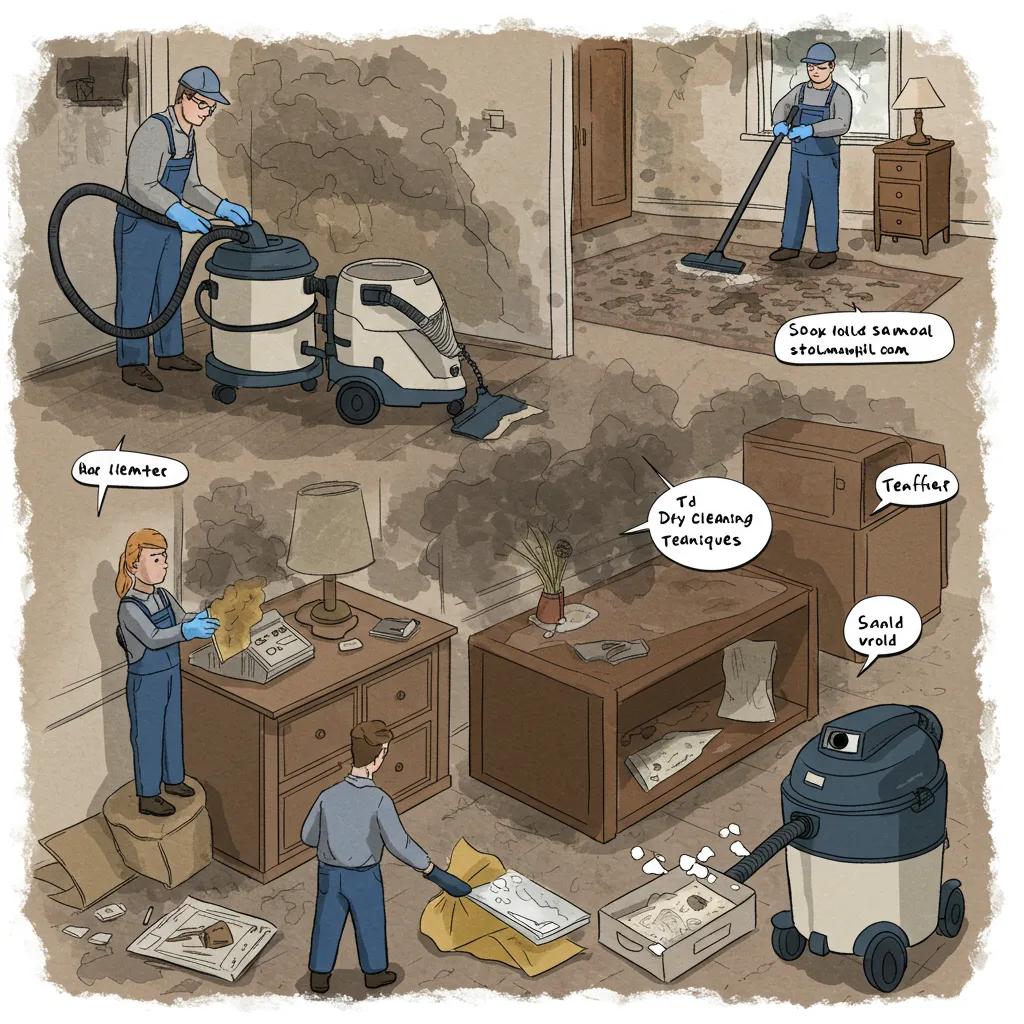
Professional soot removal during puff back cleanup follows a sequence of assessment, containment, dry particulate removal, targeted wet cleaning for oily residues, and odor neutralization using proven methods. Technicians apply IICRC-certified protocols and calibrated equipment—HEPA vacuums, thermal fogging, air scrubbers, and specialty degreasers—to safely extract soot and restore surfaces. The approach balances surface treatment with HVAC source removal to prevent redeposition and uses odor neutralization methods in the correct order for occupant safety.
The table below compares common techniques, equipment, and their typical use cases to guide selection of appropriate professional soot removal strategies.
| Technique | Equipment / Materials | Typical Use Case / Benefit |
|---|---|---|
| HEPA vacuuming | HEPA-filtered vacuum units, disposable collection bags | Removes loose particulates from surfaces and HVAC registers as source-control step |
| Dry-cleaning sponges | Chemical-free soot sponges | Lifts dry soot from delicate surfaces and trim without smearing |
| Chemical degreasers | pH-balanced degreasers and emulsifiers | Breaks down oily soot residues for subsequent rinsing and stain control |
| Thermal fogging | Thermal fogger with compatible neutralizing agents | Penetrates odors in hidden voids and treated surfaces for odor neutralization |
This table highlights that effective professional soot removal combines mechanical extraction, safe chemical treatment, and odor-specific technologies to achieve comprehensive restoration.
What Specialized Techniques Are Used for Effective Soot Removal?
Effective soot removal techniques include HEPA vacuuming for loose particulate extraction, dry-cleaning sponges for delicate finishes, chemical degreasers for oily residues, and controlled wet cleaning for resilient stains. HEPA vacuuming removes airborne and surface particulates prior to wiping, reducing airborne redistribution and preparing substrates for targeted cleaning. Dry-cleaning sponges lift soot from painted or delicate surfaces without solvents, minimizing damage to trim and fabrics that could be etched by abrasive methods. Chemical degreasers and emulsifiers dissolve oily soot for safe removal, after which rinse and neutralization prevent residue and odor persistence. Selecting the right combination of these methods is essential to restore surfaces without causing additional harm.
How Is Containment Managed to Prevent Cross-Contamination?
Containment begins with establishing negative-pressure zones using air scrubbers and sealed plastic barriers to isolate affected areas from clean spaces and HVAC returns. Technicians place critical barriers at doorways and vents, employ zipper access systems for crew movement, and monitor pressure differentials to ensure contaminated air is exhausted safely. HVAC shutdown or isolation prevents soot from traveling through ductwork during cleaning, while staging clean and dirty zones protects contents and reduces cross-contamination risk. Containment setup typically completes within the first hour of response, enabling technicians to proceed with source removal and surface cleaning under controlled conditions. Proper containment is crucial to prevent re-soiling and preserve the progress of puff back cleanup steps.
What Are the Best Practices for Odor Neutralization After Puff Back?
Best practices for odor elimination after puff back include treating surfaces, addressing HVAC sources, and sequencing odor-control technologies to maximize safety and effectiveness. Thermal fogging penetrates treated areas and can seal in neutralizing agents, while hydroxyl generators and air scrubbers reduce airborne VOCs and odor-causing molecules in occupied or transitional spaces. Ozone may be effective in unoccupied structures but carries safety risks and is only used selectively under controlled conditions; professionals advise occupant-safe alternatives when possible. Combining source removal, surface cleaning, and appropriately sequenced deodorization reduces persistent odors and improves indoor air quality outcomes after restoration. Choosing the right odor-neutralization path depends on contamination extent and occupancy considerations.
How Is HVAC and Duct Cleaning Conducted After a Puff Back?
HVAC and duct cleaning after a puff back focuses on source removal from registers, coils, and plenums to prevent ongoing redistribution of soot and odors throughout the building. Technicians perform mechanical agitation, HEPA vacuuming, and negative-pressure source removal to extract embedded soot from ducts and components, followed by filtration upgrades and testing to confirm particulate reduction. Addressing the HVAC system is critical because even thorough surface cleaning of rooms can be undermined by contaminated ducts circulating soot back into cleaned spaces.
The table below lists HVAC components, cleaning methods, and expected outcomes to clarify why professional HVAC soot removal is essential for complete restoration.
| Component | Cleaning Method | Expected Outcome / Time |
|---|---|---|
| Supply and return registers | HEPA vacuum + manual agitation | Visible soot removal; filter replacement recommended; 1–2 hours per system zone |
| Duct interiors | Mechanical brushing / air whipping + negative pressure HEPA extraction | Source removal reduces redeposition and odor; 2–6 hours depending on system size |
| Coils and plenums | Soft agitation, HEPA extraction, and chemical cleaning if needed | Restores airflow efficiency and reduces corrosion risk; 1–3 hours |
This table shows that coordinated HVAC cleaning restores airflow and prevents recontamination, justifying professional intervention for puff back restoration.
Why Is Thorough Duct Cleaning Critical for Puff Back Restoration?
Thorough duct cleaning is critical because ducts act as hidden reservoirs that can redeposit soot onto cleaned surfaces and perpetuate odors if left untreated. Even when room surfaces are professionally cleaned, contaminated ductwork can reintroduce particulates through supply registers and return pathways, negating localized cleaning efforts. Removing soot from duct interiors, coils, and plenums restores HVAC performance, reduces particulate load, and supports long-term indoor air quality improvements. Prompt HVAC soot removal shortens overall restoration timelines and reduces the probability of repeat cleaning or reconstruction due to redeposition. Recognizing ducts as part of the contamination system ensures more durable restoration results.
What Equipment and Methods Are Used for HVAC System Cleaning?
HVAC system cleaning uses specialized equipment: HEPA-filtered vacuum units for source extraction, mechanical agitation tools (rotary brushes, air whips) to dislodge adhered soot, and negative-pressure systems to capture particles during agitation. Coil cleaning may require soft-bristled tools and safe chemical cleaners to remove oily films without damaging fin assemblies, followed by filter replacement and system testing. Post-cleaning verification often includes visual inspection, particulate testing, and airflow checks; in some cases, upgrading to HEPA filtration reduces future risk. Using these methods together provides source removal and system verification, which are essential steps in comprehensive puff back cleanup.
How Are Contents and Structural Repairs Handled in Puff Back Cleanup?
Contents and structural repairs are handled through triage, pack-out and off-site cleaning of salvageable items, and stepwise surface restoration including sealing, priming, and repainting where needed. Restoration teams categorize items as salvageable, restorable with specialized cleaning, or irreparably damaged, then document and inventory each item for insurance and chain-of-custody purposes. Structural repairs follow cleaning and testing: surfaces are cleaned, tested for staining and odor, then sealed and repainted or replaced if staining or substrate damage persists. The process aims to restore occupancy-ready conditions while preserving evidence and minimizing replacement costs through professional cleaning and reconstruction planning.
What Is Included in Content Cleaning and Pack-Out Services?
Content cleaning and pack-out services include on-site triage, documentation and tagging of items, secure transport to specialized cleaning facilities, and tailored cleaning methods for textiles, upholstery, electronics, and valuables. Soft goods like curtains and upholstery often undergo wet-cleaning or dry-cleaning sponge treatment, while textiles may receive off-site laundering or ultrasonic cleaning depending on residue type. Electronics and sensitive items receive corrosion control and specialist cleaning to reduce damage risk, and secure storage preserves inventory integrity during structural repairs. Detailed inventories and photographic records support insurance claims and help prioritize restoration timelines and return-to-service sequencing.
How Are Walls, Ceilings, and Surfaces Restored After Soot Damage?
Restoration of walls, ceilings, and surfaces begins with dry particulate removal, followed by degreasing, surface testing, sealing with stain-blocking primers, and repainting or replacement as warranted by substrate condition. Porous materials often require more aggressive preparation, including de-glossing, spot-priming, and use of specialized sealants to prevent bleed-through from residual oils. For severe substrate damage or adhesion loss, partial or full replacement of drywall or trim may be necessary, after which reconstruction and finishing restore aesthetics and performance. Technicians validate surface readiness using tactile and visual inspection before final coatings are applied to ensure long-term protection against residual staining and odors.
How Can You Prevent Future Puff Backs Through Furnace Maintenance?
Preventing future puff backs relies on regular furnace maintenance, professional burner inspections, and homeowner awareness of early warning signs to trigger service before a failure occurs. Annual inspections, nozzle cleaning or replacement, ignition system testing, and combustion analysis ensure burners operate within manufacturer tolerances and reduce incomplete combustion risks. Homeowners can perform simple checks—monitor unusual odors, noisy startups, or soot traces—that prompt immediate professional evaluation to avoid escalation. Documented maintenance records also support insurance considerations by demonstrating reasonable upkeep and risk mitigation. The maintenance checklist below outlines recommended annual tasks and responsibilities.
Recommended annual maintenance tasks to help avoid puff backs include:
- Professional burner cleaning and nozzle inspection to ensure proper atomization.
- Ignition system testing and safety control checks to verify reliable startup.
- Filter replacement and combustion efficiency testing to maintain correct air-fuel ratios.
These steps reduce fuel buildup, improve combustion stability, and lower the likelihood of puff back events, making maintenance an effective preventive investment. Consistent documentation of performed services further supports claims and lifecycle management.
What Are the Recommended Annual Maintenance Steps to Avoid Puff Backs?
Recommended annual maintenance steps include professional burner cleaning, nozzle inspection or replacement, ignition and control system testing, filter replacement, and combustion tuning or analysis when applicable. Burner cleaning and nozzle service restore correct spray patterns and combustion characteristics, minimizing the formation of oily soot. Ignition system and safety control calibration prevent delayed ignition or misfires, while filter and airflow maintenance preserve proper air-fuel balance. Scheduling these tasks with qualified technicians reduces both puff back probability and the long-term costs associated with puff back damage assessment and restoration.
How Does Regular Furnace Care Reduce Health and Property Risks?
Regular furnace care reduces health and property risks by improving combustion efficiency, lowering soot production, and maintaining HVAC filtration that limits particulate dispersion. Fewer soot-producing events translate to reduced exposure to fine particulate matter and chemical residues that exacerbate respiratory conditions and degrade indoor air quality. Proactive maintenance also reduces the chance of large-scale contamination that requires extensive pack-out and reconstruction, thereby protecting occupants and limiting insurance claims complexity. Maintaining records of regular service demonstrates diligence to insurers and supports smoother claims when restoration is required.
How Do You Navigate Puff Back Insurance Claims Successfully?
Navigating insurance coverage for puff back typically requires timely documentation, professional assessment, and clear communication with adjusters to establish cause, scope, and appropriate remediation costs. A streamlined claims workflow centers on photos, room-by-room inventories, technician reports, and detailed scope-of-work estimates that quantify restoration and reconstruction needs. Restoration Experts provides Insurance Claim Support by preparing on-site documentation, coordinating with adjusters, and furnishing estimator reports to reduce claim friction and speed approvals. The table below lists essential documents, who prepares them, and why they matter during a puff back claim.
Collecting the right documents quickly improves claim outcomes and reduces delays during insurer evaluations.
| Document | Who Prepares It | Why It’s Important |
|---|---|---|
| Timestamped photos and videos | Homeowner or property manager | Visual evidence of extent and location of soot for initial claim triage |
| Itemized inventory and photo log | Restoration technicians / homeowner | Establishes contents loss, salvageability, and replacement/repair values |
| Technician assessment and scope of work | Restoration company estimator | Professional valuation and remediation plan used by adjusters |
| Receipts and proof of ownership | Homeowner | Verifies value of high-cost items for recovery |
What Documentation Is Needed for Puff Back Damage Insurance Claims?
Essential documentation includes timestamped photos, a room-by-room inventory, receipts or proof of ownership for high-value items, and professional technician reports that describe contamination, required remediation steps, and estimated costs. Start documenting immediately before any cleaning to preserve evidence, and keep a clear chain-of-custody when items are packed out for off-site cleaning. Technician assessments should itemize structural, HVAC, and content restoration needs to align restoration scope with insurer expectations. Organized documentation reduces disputes and supports a faster, more accurate insurance claim process for puff back incidents.
How Does Restoration Experts Assist With Insurance Claim Support?
Restoration Experts assists policyholders by performing on-site documentation, creating itemized pack-out inventories, preparing scope-of-work estimates, and coordinating with insurance adjusters during inspections. Their role includes providing professional reports that describe the damage, recommended remediation steps, and reconstruction planning to support appropriate coverage decisions. This assistance reduces the administrative burden on homeowners and helps insurers understand technical aspects of puff back cleanup, thereby reducing friction in claim approvals. Restoration Experts’ integrated approach—combining Puff Back and Soot cleanup with Insurance Claim Support—streamlines recovery and aligns restoration work with claim requirements.
Is Puff Back Damage Typically Covered by Homeowners Insurance?
Coverage for puff back damage often depends on individual policy language and the documented cause of the event, but many standard homeowners policies include coverage for sudden soot discharge when it is accidental and not due to neglect. Insurers commonly evaluate whether proper maintenance was performed and whether the event resulted from a sudden mechanical failure versus long-term neglect; documented maintenance records and professional assessments improve the likelihood of favorable coverage. Policyholders should promptly notify their carrier, provide comprehensive documentation, and involve certified restoration professionals to substantiate the claim. When coverage questions arise, thorough documentation and professional support enhance negotiation and resolution options.
Why Choose Restoration Experts for Your Puff Back Cleanup in New York?
Restoration Experts is a family-owned and operated restoration company offering Puff Back and Soot cleanup with IICRC-certified technicians, full licensing and insurance, and 24/7 emergency service across New York. The company provides direct insurance claim support and full-service reconstruction capabilities to manage remediation from on-site assessment through rebuild, helping clients restore occupancy-ready conditions efficiently. Restoration Experts emphasizes rapid response on Long Island—with average response times under 60 minutes—combined with deep local experience in Nassau, Suffolk, Brooklyn, Queens, Manhattan, and Westchester to deliver timely mitigation. These attributes position the company as a practical partner during urgent emergency furnace cleaning and complex restoration projects.
What Certifications and Experience Do Restoration Experts Offer?
Restoration Experts employs IICRC-certified technicians and operates as a licensed and insured restoration provider, which supports adherence to industry best practices for Puff Back and Soot cleanup. Certification indicates staff training in standardized protocols for cleaning, containment, and air quality control, while licensing and insurance protect clients during restoration activities. The company’s full-service reconstruction capability allows for coordinated transitions from remediation to rebuilding when structural replacement is necessary. These credentials combine to reduce restoration risk and provide clients with documented, professional support throughout the recovery process.
How Does 24/7 Emergency Service Benefit Puff Back Cleanup Success?
24/7 emergency service reduces damage escalation by enabling rapid mitigation, containment, and documentation immediately after puff back events, limiting staining, odor penetration, and HVAC recontamination. Early arrival allows technicians to establish negative-pressure containment, perform source removal, and document conditions for insurance while evidence is fresh. Faster response also shortens overall restoration timelines and lowers the probability of secondary issues such as microbial growth or prolonged odor. For New York properties, time-sensitive mitigation delivers better restoration outcomes and reduces total recovery costs.
Which New York Areas Are Served by Restoration Experts?
Restoration Experts serves a broad New York footprint including Nassau, Suffolk, Brooklyn, Queens, Manhattan, and Westchester, enabling localized response and familiarity with regional building systems and insurance practices. Local presence supports faster mobilization, better knowledge of area HVAC and fuel systems, and clearer expectations for response timelines in different boroughs and counties. Residents and property managers in these service areas can expect coordinated emergency furnace cleaning, Puff Back and Soot cleanup, and integrated reconstruction planning tailored to local conditions. Contacting a local restoration provider streamlines logistics and supports faster, more efficient recovery.
What Are the Health Risks Associated with Puff Back Soot Exposure?
Puff back soot contains fine particulate matter and chemical residues that degrade indoor air quality and can aggravate respiratory conditions, making professional remediation a public health priority. Fine soot particles penetrate deep into the lungs and can carry acidic or toxic compounds that irritate airways, exacerbate asthma, and increase risks for vulnerable populations including children and the elderly. Professional containment, HEPA filtration, and source removal directly reduce airborne particulates and chemical residues, restoring safer indoor air. Understanding health risks clarifies why rapid remediation and HVAC cleaning are essential components of puff back cleanup steps.
Soot Particles: Formation, Health Effects, and Toxicity Mechanisms
1. This review summarizes the current knowledge (definition, source, formation, structure, chemical composition, and health effects) about atmospheric soot particles and aims to analyze their health effects combined with their structural characteristics.
2. The new understanding of soot microstructure (analogous to reduced graphene oxide (RGO)) suggests the presence of oxygen-containing functional groups (OFGs) in carbonaceous core (CC) of soot, which may enhance its health effects. Toxicological studies have proved that the two major components (CC and outer coating) both contribute to soot toxicity, but there is still controversy over who is playing the main role. Recently, there are many studies questioning the past experimental results. The bioavailability of the outer coating bound on CC is particularly pointed out to be taken into account for soot toxicity. Existing epidemiological studies on black carbon (BC), a near-synonym of soot in atmospheric science, have prompted the adverse health effects especially for cardiovascular system. A stronger association between short term BC exposure and health endpoints is lately found than fine particulate matter (PM2.5), but still needs more consistent evidence. Therefore, the health effects of soot need more attention as well as comprehensive and in-depth research.
3. It is evident from the review that soot is a responsible agent for adverse health effects, which may exceed PM2.5. The CC and outer coating have been proved to exert toxicity separately, of which oxidative stress, inflammation, and DNA damage are most important toxicity mechanisms. However, their antagonistic interaction may weaken the toxicity of the whole soot particle.
Origin, structural characteristics, and health effects of atmospheric soot particles: A review, J Shang, 2024
How Does Soot Affect Indoor Air Quality and Respiratory Health?
Soot contains PM2.5 and smaller particles that bypass nasal filtration and deposit deep in bronchial passages, contributing to coughing, wheezing, and exacerbation of chronic respiratory illnesses. The oily and acidic nature of puff back soot can also carry aromatic hydrocarbons and combustion byproducts that irritate mucous membranes and prolong odor-related discomfort. Occupants with preexisting conditions, infants, and seniors are particularly susceptible to symptom escalation following exposure, and prolonged indoor contamination increases cumulative exposure risks. Reducing airborne particulates through professional air scrubbing and HVAC source removal mitigates these health impacts and improves occupant safety.
Why Is Professional Remediation Necessary to Protect Occupants?
Professional remediation combines containment, HEPA filtration, and validated cleaning protocols to remove airborne particles and surface residues without redistributing contamination, thereby protecting occupants from ongoing exposure. Certified technicians can perform post-restoration air quality verification and recommend filtration upgrades to maintain improved indoor conditions. Proper pack-out and content cleaning prevent continued exposure from contaminated items, while structural cleaning and sealing address sources of persistent odor and redeposition. For occupant safety and lasting indoor air quality improvements, professional remediation is the appropriate response to puff back incidents.
Frequently Asked Questions
What are the long-term health effects of exposure to puff back soot?
Long-term exposure to puff back soot can lead to serious health issues, particularly respiratory problems. The fine particulate matter in soot can penetrate deep into the lungs, aggravating conditions like asthma and chronic obstructive pulmonary disease (COPD). Additionally, soot may contain toxic compounds that can contribute to cardiovascular issues and other systemic health problems. Vulnerable populations, such as children and the elderly, are at a higher risk. Therefore, prompt and professional remediation is essential to minimize health risks associated with soot exposure.
How can homeowners identify early signs of a potential puff back?
Homeowners can identify early signs of a potential puff back by monitoring for unusual odors, particularly a strong oil smell, and listening for irregular sounds from the furnace, such as banging or popping noises. Additionally, visible soot accumulation around the furnace or on vents can indicate a problem. If the heating system exhibits delayed ignition or frequent cycling, these may also be warning signs. Regular maintenance and inspections can help catch these issues before they escalate into a puff back event.
What should be included in a puff back cleanup plan?
A comprehensive puff back cleanup plan should include immediate safety measures, such as shutting down the heating system and ventilating the area. It should outline steps for documenting damage, including taking photos and inventorying affected items. The plan should also detail the process for professional remediation, including soot removal, HVAC cleaning, and odor neutralization. Additionally, it should incorporate a follow-up strategy for assessing air quality and ensuring that all surfaces are restored to a safe condition before reoccupying the space.
What are the costs associated with professional puff back cleanup?
The costs associated with professional puff back cleanup can vary widely based on the extent of the damage, the size of the affected area, and the specific services required. Factors such as soot removal, HVAC cleaning, and structural repairs all contribute to the overall expense. On average, homeowners can expect to pay anywhere from a few hundred to several thousand dollars, depending on the severity of the incident. It’s advisable to obtain multiple estimates from certified restoration professionals to understand the potential costs involved.
How can regular maintenance prevent puff back incidents?
Regular maintenance can significantly reduce the risk of puff back incidents by ensuring that the furnace operates efficiently and safely. This includes annual inspections, cleaning of burners and nozzles, and testing ignition systems to prevent failures. Homeowners should also replace filters regularly and monitor for signs of wear or malfunction. By maintaining proper air-fuel ratios and ensuring that the heating system is in good working order, the likelihood of soot accumulation and subsequent puff back events can be minimized.
What are the best practices for documenting damage after a puff back?
Best practices for documenting damage after a puff back include taking timestamped photographs of affected areas and items, creating a detailed inventory of damaged contents, and noting the extent of soot deposition. Homeowners should also keep records of any immediate actions taken, such as contacting restoration professionals. This documentation is crucial for insurance claims and helps establish the scope of damage for restoration efforts. Maintaining a clear chain of custody for any items removed for cleaning is also important for accountability.
Conclusion
Effective puff back cleanup is essential for restoring indoor air quality and preventing long-term damage to your property. By understanding the causes and taking immediate action, homeowners can significantly mitigate the impact of soot contamination. Partnering with professional restoration services ensures thorough remediation and supports a smoother insurance claims process. For expert assistance with your puff back cleanup, contact Restoration Experts today.