
September 20, 2025
Essential Asbestos Removal Protocols in New York Explained
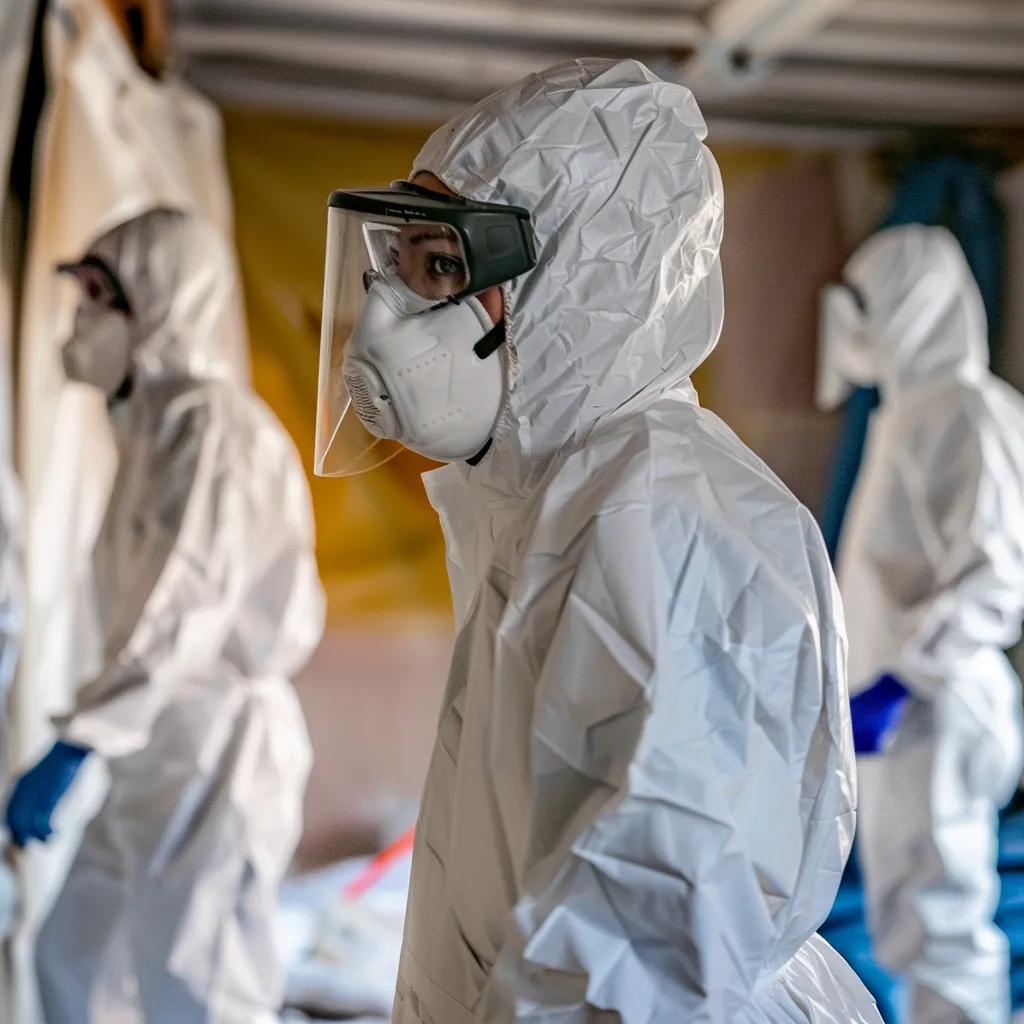
Understanding Asbestos Removal Protocols and Regulations in New York
Asbestos removal protocols in New York rest on a multi-agency framework designed to safeguard public health while ensuring licensed professionals handle every step of abatement. You’ll discover the key statutes, licensing requirements, City versus State nuances, testing and air-quality mandates, disposal rules, step-by-step removal workflows, cost drivers, insurance claim navigation, and regional variations—from Long Island to Manhattan boroughs. Whether you’re a homeowner scheduling pre-renovation inspections or a property manager overseeing large-scale abatement, this guide maps out each regulation and procedure. RestorationExperts.com partners with you to deliver compliant inspections, emergency response, and insurance claim support across New York State and City.
What Are the Key Asbestos Removal Laws and Licensing Requirements in New York State?
New York State asbestos removal laws are codified primarily under 12 NYCRR Part 56 (NYSDOL), 10 NYCRR Part 73 (NYSDOH), and 6 NYCRR Parts 360/364 (NYSDEC), establishing licensing, training, inspection, handling, transportation, and disposal mandates. For example, any contractor disturbing friable asbestos in a commercial building must hold a NYSDOL asbestos contractor license and comply with NYSDOH-approved worker certification—ensuring public safety through regulated abatement.
Key Asbestos Removal Laws and Licensing Requirements in New York State
New York State’s asbestos removal regulations are primarily outlined in 12 NYCRR Part 56 (NYSDOL), 10 NYCRR Part 73 (NYSDOH), and 6 NYCRR Parts 360/364 (NYSDEC). These regulations establish mandates for licensing, training, inspection, handling, transportation, and disposal of asbestos [5].
New York State Department of Health, Asbestos Laws and Regulations (October 2023)
Which Agencies Regulate Asbestos Abatement in New York State?

| Entity | Attribute | Role & Authority |
|---|---|---|
| New York State Department of Labor (NYSDOL) | Licensing & Enforcement | Issues asbestos contractor and supervisor licenses; enforces 12 NYCRR 56 |
| New York State Department of Health (NYSDOH) | Training & Certification | Approves worker training programs; issues abatement worker certificates under 10 NYCRR 73 |
| NYS Department of Environmental Conservation (NYSDEC) | Waste Oversight | Regulates asbestos waste transportation, landfill permits under 6 NYCRR 360/364 |
Each agency interlocks to cover licensing, training, and disposal—laying the groundwork for safe, compliant abatement.
Agencies Regulating Asbestos Abatement in New York State
The New York State Department of Labor (NYSDOL) is responsible for licensing and enforcement, issuing asbestos contractor and supervisor licenses, and enforcing 12 NYCRR 56. The New York State Department of Health (NYSDOH) oversees training and certification, approving worker training programs and issuing abatement worker certificates under 10 NYCRR 73. The NYS Department of Environmental Conservation (NYSDEC) regulates waste oversight, including asbestos waste transportation and landfill permits under 6 NYCRR 360/364 [3, 5].
New York State Department of Environmental Conservation, Asbestos (n.d.)
What Are the NYSDOL Licensing and Certification Requirements for Asbestos Contractors?
- Submit proof of $1 million general liability insurance and worker’s compensation coverage.
- Provide documentation of NYSDOL-approved training for all supervisors and workers.
- Pass a written examination on Industrial Code Rule 56.
- Renew annually and complete eight hours of continuing education.
Contractors remain compliant by updating insurer certificates and training records—ensuring every abatement team meets State licensing standards.
NYSDOL Licensing and Certification Requirements for Asbestos Contractors
To obtain a NYSDOL asbestos abatement contractor license, entities must provide proof of $1 million general liability insurance and worker’s compensation coverage, documentation of NYSDOL-approved training for all supervisors and workers, pass a written examination on Industrial Code Rule 56, and renew annually with eight hours of continuing education [4, 20].
FindLaw, New York Asbestos Regulations (n.d.)
How Does NYSDOH Regulate Asbestos Safety Training and Worker Certification?
- Workers must attend a four-day NYSDOH-approved initial course plus two-day refresher every three years.
- Supervisors complete an eight-hour supervisor module emphasizing project management, air monitoring basics, and regulatory updates.
- Certificates include photo ID and unique certification numbers to verify credentials on site.
This training regimen reduces exposure incidents and fosters uniform safety practices across abatement projects.
What Are the Roles and Requirements for Asbestos Inspectors and Project Monitors in NY?
- Inspectors conduct pre-renovation surveys, collect bulk samples, and prepare ACP-5 forms (NYC) or State survey reports.
- Project monitors perform daily on-site oversight, ensuring containment integrity and PPE compliance.
- Both must hold certifications—inspectors under NYSDOH, monitors under NYSDOL—validating expertise in sampling protocols and air-monitoring equipment.
These roles ensure each abatement step aligns with regulatory standards, protecting occupants and workers alike.
How Are Asbestos Abatement Projects Monitored and Enforced in New York State?
- NYSDOL inspectors may conduct unannounced visits, review training records, and verify work practices under Rule 56.
- NYSDEC inspects waste transporter logs and landfill manifests to confirm proper disposal at licensed sites.
- Violations can incur fines from $1,200 to $10,000 per infraction, plus work stoppage orders.
Consistent enforcement drives contractors to maintain rigorous safety protocols and documentation.
What Are the Specific Asbestos Control Laws and Procedures in New York City?
New York City’s Department of Environmental Protection (DEP) governs asbestos work within city limits under Title 15, Chapter 1 of the NYC Rules—supplementing State regulations with forms, notifications, and handler-specific licensing.
What Are the NYC DEP Asbestos Survey and Inspection Requirements?
- The investigator documents ACM locations, quantities, and friability.
- Results are compiled into the ACP-5 Asbestos Inspection Report.
- The report must be retained on site and a copy submitted to DEP for projects disturbing over 160 sq ft of ACM.
NYC DEP Asbestos Survey and Inspection Requirements
In New York City, property owners must commission a DEP-certified asbestos investigator to perform a comprehensive survey before renovation or demolition. This survey documents ACM locations, quantities, and friability, and the results are compiled into the ACP-5 Asbestos Inspection Report [11, 14].
NYC.gov, Asbestos Abatement (n.d.)
How Do Property Owners File Asbestos Project Notifications Using Form ACP-7?
- Complete and submit Form ACP-7 to NYC DEP at least 7 calendar days prior to abatement.
- Include ACP-5 report, work schedule, contractor license details, and waste transporter information.
- Pay the applicable filing fee (based on disturbed area).
Filing ACP-7 ensures DEP has advance notice to monitor high-risk projects and confirm public safety measures.
What Are the NYC Asbestos Abatement Procedures and Handler Certification Rules?
- Establish negative-pressure enclosures and critical barriers.
- Use wet methods to suppress fiber release during removal.
- Place materials in sealed, labeled OSHA-approved bags for transport.
- Perform periodic air monitoring by a DEP-certified handler using calibrated pumps and PCM/TEM analysis.
Handlers must complete DEP’s 32-hour Asbestos Handler course and renew every three years to maintain certification.
NYC Asbestos Abatement Procedures and Handler Certification Rules
In NYC, asbestos abatement involves strict containment and removal steps, including establishing negative-pressure enclosures, using wet methods, placing materials in sealed, labeled OSHA-approved bags, and performing periodic air monitoring by a DEP-certified handler [9, 11]. Handlers must complete the DEP’s 32-hour Asbestos Handler course and renew every three years to maintain certification [8].
NYC.gov, Asbestos Rules and Regulations (n.d.)
How Are Asbestos Violations Managed and Removed in NYC?
- DEP issues Notices of Violation (NOV) for non-compliance, requiring:
- Cease-work orders until corrective actions are implemented.
- Submission of revised ACP-7 forms or supplementary surveys.
- Possible civil penalties up to $10,000 plus daily penalties.
Once violations are resolved and clearance air tests pass, DEP rescinds NOVs—allowing project completion.
What Are the Differences Between NYC and New York State Asbestos Regulations?
| Entity | NYS Rule | NYC Rule |
|---|---|---|
| Governing Code | 12 NYCRR Part 56 | Title 15, Ch. 1 of NYC Rules |
| Survey Form | State Survey Report | ACP-5 Asbestos Inspection Report |
| Notification | No centralized filing | Mandatory ACP-7 filing 7 days prior |
| Handler Cert | NYSDOH worker certification | DEP Asbestos Handler certification |
| Enforcement | Fines $1,200–$10,000 per infraction | NOVs, civil penalties, daily fines |
State rules establish baseline requirements, while NYC layers in specific forms, shorter notice periods, and handler licensing—heightening local oversight and public health protections.
How Is Asbestos Testing and Air Monitoring Conducted and Regulated in New York?
Asbestos testing and air monitoring ensure that abatement projects meet clearance criteria and protect building occupants from fiber exposure.
What Is the Process for Asbestos Inspection and Testing in New York State?
- Conduct visual survey and identify suspect materials.
- Collect bulk samples using core drills or scrapers.
- Submit samples to accredited laboratories for PLM or TEM analysis.
- Issue a formal inspection report detailing ACM locations and concentrations.
Asbestos Testing and Air Monitoring in New York State
State-certified asbestos inspectors conduct visual surveys, collect bulk samples, and submit them to accredited laboratories for analysis using methods like PLM or TEM. Regulations mandate two phases of air monitoring: during abatement and post-abatement clearance, with independent TEM testing required before enclosure removal [16, 17].
New York State Department of Health, Asbestos (n.d.)
What Are the Types of Asbestos Testing Used in New York?
- Polarized Light Microscopy (PLM) — identifies fiber type in bulk materials.
- Transmission Electron Microscopy (TEM) — detects low-level fibers in air samples.
- Phase Contrast Microscopy (PCM) — measures airborne fiber counts during and after abatement.
How Are Asbestos Air Monitoring and Clearance Testing Regulated?
- During Abatement: Continuous PCM sampling at enclosure exhaust and worker breathing zones.
- Post-Abatement Clearance: Independent TEM testing at a minimum of 100 fibers/L threshold before enclosure removal.
Clearance results must be documented in a final report—certifying that airborne fiber levels meet State and City criteria.
Who Conducts Independent Air Monitoring and What Are Their Responsibilities?
- Maintain chain-of-custody from sample collection to laboratory analysis.
- Use calibrated equipment and follow NIOSH Method 7400 or ASTM D6281.
- Prepare detailed monitoring logs and clearance certificates for regulatory review.
Independent monitors verify contractor performance and confirm public safety before re-occupancy.
What Are the Regulations for Asbestos Waste Disposal and Transportation in New York?
Proper asbestos waste disposal and transportation prevent environmental contamination and protect waste-handling personnel.
How Does NYSDEC Regulate Asbestos Waste Transportation and Disposal?
- Transporters must be registered and insured.
- Maintain manifest logs detailing generator, quantity, and disposal facility.
- Deliver waste only to EPA- and NYSDEC-approved disposal sites.
Regulations for Asbestos Waste Disposal and Transportation in New York
NYSDEC requires waste transporters to obtain a permit under 6 NYCRR Part 364, maintain manifest logs, and deliver waste only to EPA- and NYSDEC-approved disposal sites. All asbestos waste must be sealed and labeled according to OSHA and NYSDEC standards [3, 13].
New York State Department of Environmental Conservation, Asbestos (n.d.)
What Are the Packaging and Labeling Requirements for Asbestos Waste?
- Sealed Packaging: Double-layered, leak-tight bags or DOT-approved drums.
- Label: “DANGER: ASBESTOS – CANCER AND LUNG DISEASE HAZARD” with generator name and date.
- Manifest: Accompanying transport manifest indicating weight, volume, and waste codes.
Proper packaging and labeling safeguard handlers and inform landfill operators of hazards.
What Is the Difference Between Friable and Non-Friable Asbestos Disposal?
| Entity | Attribute | Disposal Requirement |
|---|---|---|
| Friable Asbestos | Form | Must be disposed at licensed asbestos monofills; strict wet methods required |
| Non-Friable Asbestos | Form | Can be disposed in lined construction/demolition landfills if intact and contained |
Friable materials that can be crumbled by hand pose higher release risks—requiring specialized monofills—whereas non-friable waste follows standard C&D landfill protocols when properly packaged.
Where Are Approved Asbestos Landfills Located in New York?
- East Rockaway Asbestos Disposal Site, Nassau County
- Haist-Stillwater Landfill, Saratoga County
- Ft. Edward Loading Facility, Washington County
Selecting an approved facility ensures compliance and avoids costly environmental violations.
What Is the Step-by-Step Process for Safe Asbestos Removal and Abatement in New York?
A systematic abatement workflow protects workers, occupants, and the environment from asbestos hazards.
What Are the Initial Steps: Inspection, Testing, and Surveying?
- Inspection: Certified investigator surveys suspect materials.
- Testing: Bulk samples analyzed for fiber content.
- Surveying: Document ACM locations in a formal report (ACP-5/State Survey).
These preliminary steps define project scope and inform containment design.
How Is Containment and Worker Safety Managed During Removal?
- Negative-Pressure Enclosures: HEPA-filtered air changes prevent fiber migration.
- Decontamination Units: Three-chamber systems allow safe entry and exit.
- Personal Protective Equipment: Full-body suits, respirators, and disposable gloves.
Strict adherence to these measures minimizes exposure and ensures regulatory compliance.
What Are the Procedures for Emergency Asbestos Removal in New York?
- Obtain verbal NYSDOL approval for rapid response.
- Deploy immediate containment and wet methods to stabilize friable ACM.
- Submit post-emergency ACP-7 notification within 48 hours.
- Conduct expedited clearance testing before re-occupancy.
Rapid mobilization preserves safety without compromising regulatory standards.
How to Choose a Licensed and Certified Asbestos Removal Contractor?
- Licenses & Certifications: Verify NYSDOL and NYC DEP credentials.
- Insurance & Bonding: Confirm $1 million liability and worker’s comp coverage.
- Experience & References: Review past project case studies in similar building types.
- Transparent Pricing & Estimates: Ensure detailed scopes and itemized quotes.
Choosing a qualified contractor like RestorationExperts.com ensures seamless compliance and professional results.
How Do Costs and Insurance Claims Work for Asbestos Removal in New York?
Understanding cost drivers and insurance navigation helps property owners budget abatement projects effectively.
What Factors Affect the Cost of Asbestos Testing and Removal in New York?
| Entity | Attribute | Value / Impact |
|---|---|---|
| Project Size | Area of ACM | Larger disturbed areas increase labor, containment, and disposal fees |
| Material Friability | Condition of ACM | Friable materials require wet methods and specialized landfills—higher cost |
| Accessibility | Building Layout | Confined spaces or multi-story structures add scaffolding and time expenses |
| Emergency Response | Timeframe | Urgent mobilization and expedited clearance testing incur premium rates |
Factors Affecting the Cost of Asbestos Testing and Removal in New York
The cost of asbestos removal is affected by project size, material friability, accessibility, and emergency response requirements. These factors combine to determine total project budgets, which can range from $5 to $25 per sq ft for full abatement [7].
Regional Environmental Demolition Inc. (R.E.D.), Asbestos Abatement Regulations in New York State: What Property Owners Need to Know (November 14, 2024)
How Can Property Owners Navigate Asbestos Insurance Claims?
- Documenting pre-abatement inspection reports and licenses.
- Submitting itemized invoices, waste manifests, and clearance certificates.
- Communicating directly with adjusters to clarify regulatory compliance.
- Leveraging RestorationExperts.com’s claim assistance services to streamline reimbursements.
Clear documentation and expert support accelerate claim approvals and minimize out-of-pocket expenses.
Where Can You Get Free Estimates and Consultations for Asbestos Removal?
- Complimentary on-site inspections.
- No-obligation digital and in-person estimates.
- Emergency response hotline available 24/7.
- Insurance claim guidance with every quote.
Contact us to schedule a free consultation and receive a transparent, itemized proposal.
How Do Asbestos Removal Regulations Vary Across New York Regions?
Regional differences in enforcement, permit processes, and disposal options require localized understanding.
What Are the Asbestos Removal Requirements for Long Island (Suffolk and Nassau Counties)?
- Mandatory NYSDOL contractor licensing and NYSDOH worker certification.
- Preferred monofills: East Rockaway and Brookhaven Landfill (per Suffolk County guidelines).
- Accelerated permitting for municipal projects—streamlining schedule for school renovations.
These local nuances influence project timelines and facility selection.
How Do NYC Boroughs Differ in Asbestos Abatement Regulations?
- Manhattan & Brooklyn: Centralized DEP submission at 59th Street office; robust air-monitoring network.
- Queens & Bronx: Regional DEP satellite offices; emphasis on public building inspections.
- Staten Island: Combined borough handling with expedited ACP-7 approvals for industrial sites.
Understanding borough-specific logistics optimizes filing and inspection scheduling.
What Are the Regulations for Asbestos in Commercial vs. Residential Buildings in New York?
| Entity | Attribute | Requirement Difference |
|---|---|---|
| Commercial Projects | Licensing & Notifications | Always require ACP-7/State filings regardless of area disturbed |
| Residential Projects | Threshold Exemptions | Homes under 4 units can self-perform non-friable work with notification |
| Air Monitoring | Frequency | Commercial sites mandate continuous monitoring; residences may use periodic spot checks |
Commercial sites face stricter documentation and continuous air sampling, while small residential projects enjoy limited exemptions—with professional guidance recommended to avoid fines.
RestorationExperts.com combines licensed expertise with regulatory mastery to guide you through every step of asbestos inspection, removal, disposal, and insurance claim facilitation. Our certified teams maintain full compliance with NYSDOL, NYSDOH, NYSDEC, and NYC DEP regulations, delivering safe, efficient abatement for residential and commercial clients across all New York regions. Contact us today to request a free estimate, arrange emergency response, or explore insurance claim support—ensuring your project meets the highest standards of safety and regulatory compliance.
Investing in professional asbestos removal not only protects building occupants from health hazards but also safeguards your property value and legal standing. By adhering to New York’s intricate regulatory landscape, you gain peace of mind and fast, compliant project completion from inspection through disposal.
Frequently Asked Questions
What should I do if I suspect asbestos in my home?
If you suspect asbestos in your home, do not disturb the material. It’s crucial to contact a certified asbestos inspector who can conduct a thorough assessment. They will perform a visual survey and collect samples for laboratory analysis. If asbestos is confirmed, they will provide guidance on the next steps, which may include safe removal or encapsulation. Always prioritize safety and avoid DIY removal, as improper handling can release harmful fibers into the air.
How long does the asbestos removal process typically take?
The duration of the asbestos removal process can vary significantly based on several factors, including the size of the area affected, the type of asbestos material, and the complexity of the project. Generally, small residential projects may take a few days, while larger commercial abatement can extend to weeks. A detailed assessment by a licensed contractor will provide a more accurate timeline tailored to your specific situation, ensuring all safety protocols are followed.
Are there any health risks associated with asbestos exposure?
Yes, asbestos exposure poses serious health risks, including lung cancer, mesothelioma, and asbestosis. These conditions can develop over many years, often after prolonged exposure to airborne asbestos fibers. Symptoms may not appear until decades later, making it crucial to address any potential asbestos hazards promptly. If you believe you have been exposed, consult a healthcare professional for evaluation and monitoring, especially if you experience respiratory issues or other related symptoms.
What are the costs associated with asbestos removal?
The costs of asbestos removal can vary widely based on factors such as the size of the area, the type of asbestos material, and the complexity of the job. On average, homeowners can expect to pay between $5 to $25 per square foot for full abatement. Additional costs may arise from testing, air monitoring, and disposal fees. It’s advisable to obtain multiple estimates from licensed contractors to ensure a fair price and comprehensive service.
Can I perform asbestos removal myself?
It is not recommended to perform asbestos removal yourself unless you are a trained and licensed professional. Asbestos handling requires specialized training, equipment, and adherence to strict safety regulations to prevent fiber release and exposure. DIY removal can lead to serious health risks and legal penalties. Always hire a certified asbestos abatement contractor to ensure safe and compliant removal, protecting both your health and property.
What should I look for in an asbestos removal contractor?
When selecting an asbestos removal contractor, ensure they are licensed and certified by relevant state and local authorities. Check for proof of insurance, including general liability and worker’s compensation. Evaluate their experience with similar projects and request references or case studies. Additionally, a reputable contractor should provide a detailed, itemized estimate and be transparent about their processes and safety measures. This diligence helps ensure a successful and compliant abatement project.
What happens if asbestos is found during a renovation?
If asbestos is discovered during a renovation, work should be halted immediately to prevent disturbance of the material. Contact a licensed asbestos inspector to assess the situation and determine the best course of action. Depending on the findings, the inspector may recommend removal, encapsulation, or monitoring. It’s essential to follow regulatory guidelines and engage certified professionals to manage the situation safely and effectively, ensuring compliance with local laws.
Conclusion
Engaging a licensed asbestos removal contractor ensures compliance with New York’s stringent regulations, protecting both health and property value. By understanding the complexities of asbestos abatement, you can navigate the process with confidence and peace of mind. Take the first step towards a safer environment by contacting RestorationExperts.com for a free estimate today. Our expert team is ready to assist you with inspections, removal, and insurance claims, ensuring a seamless experience from start to finish.