
November 8, 2025
Common Causes of Puff Back Damage: A Professional Analysis
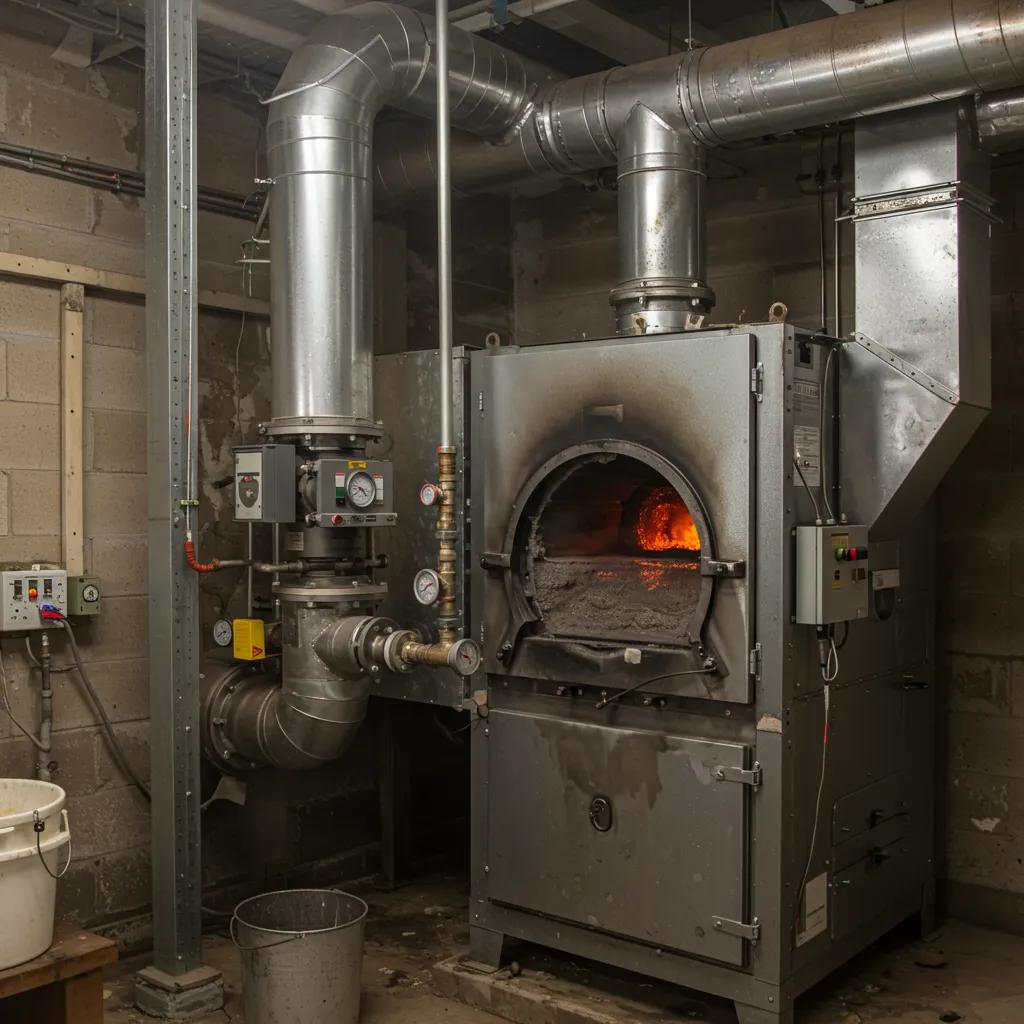
Common Causes of Puff Back Damage: Identifying, Preventing, and Restoring Furnace and Heating System Issues
A puff back is a sudden ignition of accumulated unburned fuel inside a furnace, boiler, or oil burner that expels soot, oily residue, and smoke throughout a building, causing immediate contamination and property damage. This article explains what a puff back is, why unburned fuel ignitions occur, and the short- and long-term effects on equipment, indoor air quality, and building materials. You will learn how common mechanical failures—like clogged nozzles, fuel line leaks, shutdown valve faults, chimney blockages, and ignition problems—create the conditions for a puff back, plus practical diagnostics homeowners can perform safely. The guide also provides an actionable annual maintenance checklist to reduce risk, EAV comparison tables that map causes to observable signs, and clear steps for emergency response and insurance documentation. Restoration Experts’ role is briefly noted here: as a local, family-owned provider offering 24/7 emergency restoration and specialized “Puff Back & Soot” services across New York, they coordinate rapid response and insurance support when professional cleanup is needed. Read on to understand mechanisms, recognize warning signals, prevent incidents through maintenance, and see how professional restoration and claims support work in practice.
What Is a Puff Back and How Does It Affect Your Furnace or Heating System?
A puff back is the explosive ignition of accumulated unburned fuel in the combustion chamber or flue that forces soot and oily particulates into living spaces, HVAC ducts, and surfaces. Mechanically, this happens when fuel is introduced but not fully atomized or ignited; when ignition finally occurs it creates a pressure pulse that expels combustion byproducts, resulting in wide-area soot contamination and potential system damage. The primary benefit of understanding this mechanism is that homeowners and service technicians can link specific failures—poor atomization, venting issues, or ignition malfunction—to both immediate cleanup needs and preventive maintenance steps. Recognizing the physical process helps prioritize safety actions and targeted repairs that reduce recurrent events and health risks from soot exposure. The next subsections describe the sequence of a puff back event, the nature of soot deposits it produces, and which heating systems are most vulnerable.
What Happens During a Furnace or Boiler Puff Back?
During a puff back the failure sequence typically begins with fuel accumulation in the combustion chamber or burner assembly, followed by a delayed ignition that produces a rapid pressure spike, and then the expulsion of soot and unburned fuel into the surrounding space. This stepwise mechanism explains why soot appears everywhere: the pressure pulse carries fine particulate and oily residues through vents, openings, and ductwork. Immediate hazards include poor indoor air quality, coating of delicate surfaces, and contamination of HVAC components that can spread residues when the system runs. Safe responses focus on shutting down the heating system, ventilating where possible, and documenting conditions before cleanup, because early containment changes remediation scope. Understanding the sequence clarifies why prevention efforts target fuel delivery, ignition reliability, and proper venting.
How Does Soot Damage Result from a Puff Back?
Soot produced during a puff back is an oily, carbon-rich particulate that adheres strongly to surfaces, fabrics, and porous materials; it is chemically sticky and can bond with paints, wallpaper, and electronics. The physical and chemical properties of this soot make it difficult to remove with ordinary household cleaning: it smears, re-deposits, and can penetrate insulation and upholstery fibers. Health implications include respiratory irritation and exposure to volatile organic compounds entrained in the residue, especially when contamination is widespread across HVAC ducts and living spaces. Effective remediation requires containment, specialized cleaning agents, HEPA filtration, and sometimes partial reconstruction to restore air quality and surfaces to safe standards. Knowing the composition and behavior of puff back soot guides selection of professional techniques and safety precautions.
Which Heating Systems Are Most Prone to Puff Backs?
Oil-fired boilers and oil burners are generally more prone to puff backs because they rely on precise atomization of heavy fuel oils; any deviation in nozzle performance, fuel viscosity, or ignition timing increases risk. Gas furnaces and modern boilers can experience backfires or ignition anomalies, but gas systems typically have different failure modes and safety interlocks that reduce the frequency of explosive soot events compared with oil systems. Components that increase susceptibility across system types include faulty nozzles, worn shutdown valves, compromised fuel lines, and inadequate venting or draft control. Seasonality matters too: early-season startups after a long idle period often reveal clogged nozzles or degraded components that precipitate puff backs, which is why pre-season inspection is critical to lower risk before heating cycles begin.
What Are the Most Common Causes of Furnace Puff Back Damage?

This section lists the mechanical and operational failures that most often lead to puff backs, explains how each cause produces a puff back, and shows what signs point to a specific failure. Understanding these cause-mechanism-observable sign links enables faster, safer diagnosis and targeted repairs. Below you will find a short cause list, an EAV comparison table mapping each cause to its mechanism and signs, and concise guidance about immediate mitigation and who should be called for repairs. The causes outlined include nozzle issues, fuel pipe leaks, shutdown valve faults, chimney/exhaust blockages, ignition failures, deferred maintenance, and improper installation—all of which are common contributors to puff back incidents.
- Common causes of puff back incidents:
Clogged or malfunctioning fuel nozzle that prevents proper atomization.Fuel pipe leaks introducing air or loss of pressure to the burner.Malfunctioning shutdown valve that allows uncontrolled fuel flow.Clogged chimney or exhaust vent that disrupts draft and combustion.Ignition failure leading to repeated unlit fuel cycles and accumulation.Lack of regular maintenance increasing wear and component failure.Improper installation (wrong nozzle size, venting errors) creating unsafe conditions.
This EAV table compares these causes, how each creates puff back conditions, and what observable signs to look for.
| Component Failure | Cause Mechanism | Observable Signs |
|---|---|---|
| Fuel nozzle clog | Poor atomization leaves large droplets/unburned fuel | Sooty flame, black deposits, frequent puffing at startup |
| Fuel pipe leak | Air ingress or pressure drop disrupts steady fuel flow | Oil smell, wet spots, fluctuating burner pressure |
| Shutdown valve fault | Valve fails to close or allows surge of fuel | Continuous fuel flow, inability to stop burner, spill evidence |
| Chimney/exhaust blockage | Reduced draft causes backpressure and incomplete combustion | Smoke backflow, heavy soot in flue, poor draft at startup |
| Ignition/pilot failure | Fuel introduced without ignition accumulates and later ignites | Repeated failed starts, popping noises, smell of unburned fuel |
| Deferred maintenance | Wear and deposits degrade multiple components | Progressive soot buildup, inconsistent firing, service history gaps |
| Improper installation | Incorrect nozzle, vent sizing, or draft settings | Recurrent issues despite repairs, mismatched components |
This comparison helps correlate symptoms seen by homeowners or technicians with underlying causes and frames the next steps for targeted inspection and repair.
How Does a Clogged or Malfunctioning Fuel Nozzle Cause Puff Backs?
A fuel nozzle’s role is to atomize oil into a fine spray that mixes with air for complete combustion; when it clogs or wears, atomization degrades and larger droplets fail to burn, accumulating as unburned fuel in the combustion chamber. This buildup provides the fuel reservoir that, when ignited, produces the pressure pulse and soot expulsion characteristic of a puff back. Observable cues include an irregular flame shape, heavy black soot on the burner or heat exchanger, and a sudden sooty discharge on startup. Preventive action includes scheduled nozzle inspection and replacement as needed, because a clean, correctly-sized nozzle restores proper spray pattern and reduces unburned fuel risk. Early detection by a qualified technician is safer than homeowner attempts to clear nozzles.
What Role Do Fuel Pipe Leaks Play in Puff Back Incidents?
Fuel pipe leaks introduce air into the supply line or reduce delivery pressure, disrupting the consistent fuel flow required for steady combustion; this irregular supply causes misfires, intermittent burning, and pockets of unburned fuel that can later ignite. Signs of a fuel line issue are oil odors near the tank or piping, visible wet spots or stains, and pressure anomalies reported during technician diagnostics. Leaks are urgent safety hazards because spilled oil and vapors increase fire risk and environmental contamination, so isolation of the fuel source and professional repair are immediate priorities. Correcting leaks restores reliable fuel delivery and prevents the erratic conditions that lead to puff backs.
How Can a Malfunctioning Shutdown Valve Lead to Puff Back Damage?
A shutdown valve is designed to stop fuel flow in unsafe conditions or when the burner is off; if the valve fails partially or sticks open, fuel can continue to enter the combustion chamber or be released unpredictably, creating dangerous fuel accumulation. Valve failures can result in slow drips that coat combustion surfaces over time or sudden surges that overload the chamber at startup, both of which increase puff back likelihood. Symptoms include fuel continuing to flow when the burner is off, difficulty shutting down the system, and evidence of oil where it should not appear. Timely valve testing and replacement by qualified service personnel are essential to prevent hazardous accumulations and ensure safe burner operation.
Why Does a Clogged Chimney or Exhaust Vent Increase Puff Back Risk?
The chimney or exhaust vent provides draft that removes combustion products and stabilizes air flow through the combustion chamber; blockages reduce draft, raising backpressure and causing incomplete combustion and soot formation. When a blockage exists, flame behavior changes and smoke or soot can be forced back into the living space during an ignition event, turning a minor ignition failure into a full puff back. Common causes of vent clogging include bird nests, debris, creosote buildup, and collapsed flue liners in older systems. Regular inspection and professional vent cleaning restore proper draft dynamics and significantly reduce puff back risk.
How Does Ignition Failure Trigger Puff Backs in Heating Systems?
Ignition failures leave unburned fuel in the combustion chamber when the burner tries to start but the pilot or spark does not sustain ignition; repeated restart attempts compound the accumulation until a sudden ignition occurs. Mismanaged resets or cycling increase the volume of unburned fuel and the potential energy released during a puff back. Warning behaviors include multiple failed start attempts, audible popping, and a pronounced smell of oil during startup. The safe response is to stop attempts to restart, ventilate if possible, and call a trained technician to diagnose the ignition system and associated controls rather than repeatedly cycling the unit.
How Does Lack of Regular Maintenance Contribute to Puff Back Damage?
Deferred maintenance allows progressive fouling, wear, and component drift that collectively raise the probability of puff backs: nozzles clog, valves degrade, vents accumulate deposits, and controls fall out of calibration. Regular service catches these trends early, restores correct combustion settings, and replaces parts showing wear before they fail catastrophically. Homeowners who skip annual inspections incur increased risk of fuel accumulation events and surprise puff backs, which are more damaging and costly than preventive service. Scheduling a professional annual inspection and keeping service records reduces long-term risk and strengthens insurance claim substantiation should an incident occur.
Can Improper Installation Cause Puff Back Damage?
Incorrect installation—such as wrong nozzle sizing, improper venting design, or incorrect draft settings—creates systemic combustion imbalances that predispose a system to puff backs from day one. These installation errors can manifest as consistent soot issues, recurrent ignition problems, or persistent draft failures that signal mismatched components or calibration errors. Verification by a qualified, certified installer and post-installation combustion testing confirm correct setup; if improper installation is found, corrective work should be performed promptly to eliminate built-in hazards. Using certified technicians and documented installation checks prevents latent risks that lead to puff back incidents.
What Are the Warning Signs and Symptoms of Puff Back Damage?
Recognizing early warning signs of a puff back event allows faster containment, safer evacuation, and more effective remediation planning. This section provides concise visual, olfactory, and operational indicators to help homeowners detect puff back damage quickly, plus a bulleted sign list for rapid scanning and immediate-response guidance. After the sign list is a short paragraph that explains how these symptoms affect system performance and why rapid professional assessment is necessary. Identifying patterns—like soot distribution, oily residues, and startup noises—links observed symptoms to likely root causes and appropriate next steps.
- Key warning signs to watch for include:
Distinctive soot stains and oily residue on walls, ceilings, and HVAC registers.Strong, unusual odors of burnt oil or chemical-like fumes after a failed startup.Loud popping or banging noises during ignition or immediately following a startup.Sudden degradation in heating performance or repeated cycling of the burner.
These observable signs point to contamination and mechanical anomalies that require immediate attention, and the following subsections expand on how to interpret and act on each symptom.
How to Recognize Soot Stains and Oily Residue from Puff Backs?
Puff back soot is often dark, greasy, and forms irregular stains or smears on painted surfaces, ceilings, and near vents; it can also leave a tacky film on upholstery and electronics that attracts dust. Photographic or visual documentation helps professionals assess spread and necessary cleaning methods, because soot embedded in porous materials may require specialized extraction or replacement. Home cleaning attempts using water alone risk smearing and further penetration, so preserving evidence and avoiding aggressive scrubbing until professionals evaluate the residue is recommended. Early containment and proper documentation improve remediation outcomes and insurance claim clarity.
What Unusual Odors or Noises Signal a Puff Back Event?
Distinct odors accompany puff backs: a strong oily, chemical, or burnt fuel smell often signals unburned fuel ignition, while unusual noises—sharp pops, bangs, or abrupt backfire-like sounds—indicate sudden combustion pressure changes. Differentiating these abnormal cues from normal startup sounds is important: normal systems exhibit brief ignition clicks or gentle start noises, whereas puff back-related sounds are louder, sudden, and often followed by widespread soot. If these odors or noises occur, occupants should avoid re-starting the system and should ventilate the area if safe to do so, because repeated attempts can lead to additional fuel accumulation or further contamination. Noting the timing and pattern of noises and smells assists technicians in diagnosing ignition or flow issues.
How Does Puff Back Damage Affect Heating System Performance?
Soot and oily residues can coat burners, heat exchangers, sensors, and duct interiors, reducing combustion efficiency, impairing heat transfer, and causing erratic cycling or loss of heat output. Over time, this contamination can accelerate wear on moving parts, clog nozzles, and corrode components, leading to costly repairs or component replacement. Post-incident performance decline often necessitates staged remediation: initial cleaning, component testing, and targeted replacements to restore safe, efficient operation. Timely professional cleaning and diagnostic testing can return performance to specification and reduce the risk of further puff back incidents.
How Can You Prevent Puff Back Damage Through Proper Heating System Maintenance?
Prevention centers on scheduled professional inspections, fuel system cleaning, vent maintenance, and using certified technicians to verify combustion settings; these actions reduce the mechanical conditions that create puff backs. This section supplies a practical annual maintenance checklist, recommended frequencies tied to specific tasks, and a maintenance EAV table mapping actions to the risks they prevent. Emphasizing coordination with HVAC professionals helps homeowners arrange inspections and repairs proactively. The next subsections break down essential annual steps, nozzle cleaning importance, vent cleaning, and how professional inspections mitigate risk.
- Schedule a professional annual inspection and combustion tune-up to verify burner settings and safety controls.
- Clean or replace fuel nozzles and filters annually, or more often if fuel quality indicates.
- Inspect and clean chimney and exhaust vents at least once per heating season to ensure proper draft.
- Test shutdown valves, fuel lines, and ignition systems for leaks, wear, and proper operation.
- Keep service records and document any repairs, which support preventive planning and insurance claims.
This checklist highlights actions that materially lower puff back probability and supports the next-level EAV mapping of maintenance actions to preventive outcomes.
| Maintenance Action | Recommended Frequency | Prevents / Addresses |
|---|---|---|
| Professional inspection & tune-up | Annually, before heating season | Identifies worn parts, corrects combustion settings |
| Fuel nozzle cleaning/replacement | Annually or per oil quality | Restores atomization and reduces unburned fuel |
| Chimney/exhaust cleaning | Annually or as needed | Maintains draft, prevents backpressure |
| Shutdown valve and fuel line testing | Annually and after repairs | Prevents leaks and uncontrolled fuel flow |
| Filter and burner component cleaning | Annually | Reduces soot accumulation and improves efficiency |
Regular adherence to these maintenance actions reduces the systemic failures that produce puff backs and creates documentation useful for insurance and service continuity.
What Are Essential Annual Maintenance Steps to Avoid Puff Backs?
An annual professional inspection should include combustion analysis, nozzle and filter checks, valve testing, vent inspection, and verification of control interlocks; these steps together confirm that fuel delivery, ignition, and venting operate within safe parameters. The reason these checks matter is that early detection of drift or fouling prevents fuel accumulation and ignition anomalies that lead to puff backs. Expect technicians to test flame patterns, measure exhaust composition, and replace components that no longer meet OEM specifications. Keeping records of these visits and findings helps demonstrate reasonable maintenance in the event of a claim and informs targeted prevention planning for subsequent seasons.
How Does Regular Fuel Nozzle Cleaning Reduce Puff Back Risk?
Nozzle cleaning restores the spray pattern necessary for complete combustion by removing varnish, sludge, and particulate that distort atomization; improved atomization ensures fuel mixes thoroughly with combustion air, minimizing unburned fuel pockets. When nozzles are clean and correctly sized, flame stability improves and soot production drops markedly, reducing the material available for a puff back event. Signs that nozzle service is needed include sooty flames, difficulty maintaining steady combustion, and increased smoke or odor during startup. Scheduling nozzle inspection and service at recommended intervals prevents progressive performance decline and lowers the likelihood of catastrophic ignition events.
Why Is Chimney and Exhaust Vent Cleaning Critical for Prevention?
Clean chimneys and exhaust vents maintain proper draft dynamics that remove combustion gases and stabilize airflow through the burner; blockages upset these dynamics, causing backpressure, incomplete combustion, and soot formation. Common contaminants—bird nests, debris, creosote, and accumulated particulate—physically obstruct flow and change pressure gradients, contributing directly to puff back conditions. Professional vent cleaning restores unobstructed pathways, verifies flue integrity, and reduces the probability that pressure pulses will force soot into occupied spaces. Regular inspection and cleaning are a foundational preventive measure with clear effectiveness.
How Can Professional HVAC Inspections Help Prevent Puff Backs?
Certified HVAC inspections combine component testing, combustion measurement, and safety control verification to catch subtle failures before they progress to puff back incidents; inspectors evaluate nozzles, valves, ignition cycles, and vent performance in an integrated way. The value of certified technicians lies in calibrated instrumentation, code-compliant procedures, and documented findings that guide repairs and replacement decisions. Professional inspections also produce actionable recommendations, service schedules, and records that support insurance claims if a puff back occurs. Coordination between restoration specialists and HVAC professionals closes the loop between prevention and remediation by ensuring systems are returned to safe operation.
How Does Restoration Experts Handle Puff Back Damage Cleanup and Restoration?

Restoration Experts provides specialized puff back and soot restoration services that combine certified cleaning techniques, emergency response, insurance claim support, and reconstruction capabilities for homes and businesses across New York. Their approach centers on rapid containment to limit soot migration, IICRC-certified cleaning protocols to remove oily soot safely, and coordinated support for insurance documentation and direct billing assistance where applicable. Operating family-owned with 24/7 emergency restoration dispatch, Restoration Experts emphasizes rapid local response—to reduce exposure and shrink restoration timelines. The following table summarizes service components, processes used, and client benefits to clarify how professional restoration addresses health, safety, and property recovery.
| Service Component | Process / Method | Client Benefit |
|---|---|---|
| Emergency response & containment | Rapid dispatch, scene triage, HVAC isolation | Limits soot spread, protects occupants |
| Soot cleanup & decontamination | HEPA vacuuming, chemical cleaning, abrasive-free techniques | Restores surfaces, improves air quality |
| Air quality & odor control | Air scrubbers, HEPA filtration, ozone/ozone alternatives as appropriate | Removes particulates and odors, speeds occupancy |
| Insurance & claims support | Documentation, estimates, direct billing assistance | Simplifies claims process and reimbursement |
| Reconstruction & repairs | Full-service rebuilding of affected areas | Restores property function and aesthetics |
This service mapping demonstrates how integrated restoration methods reduce health risk, accelerate recovery, and simplify insurance interactions for affected property owners.
What Professional Techniques Are Used for Soot Cleanup After a Puff Back?
Professional soot remediation begins with containment and HVAC isolation to stop further spread, followed by dry vacuuming with HEPA-grade equipment to remove loose particulates and specialized chemical cleaning to dissolve oily deposits without damaging surfaces. Technicians often use multi-step processes—agitation, targeted cleaning agents, and non-abrasive extraction—to remove residues from textiles, walls, and HVAC components, supplemented by air filtration and odor control to restore indoor air quality. Safety protocols include PPE, source removal, and ambient monitoring to protect occupants and workers. When structural damage or persistent staining exists, controlled reconstruction or surface replacement may be necessary to fully restore function and aesthetics.
How Does Restoration Experts Support Insurance Claims for Puff Back Damage?
Restoration Experts assists clients by documenting damage with photos and detailed estimates, preparing scope-of-work reports for insurers, and offering direct billing assistance to streamline the claims process; this coordination helps clients present comprehensive evidence and accelerates approvals. Clients benefit from guidance on which documents to collect—service records, appliance history, and initial incident notes—which strengthen claim validity, especially where maintenance-related exclusions might be reviewed. The company’s experience in insurer interactions clarifies common coverage considerations and assists homeowners in navigating typical questions about maintenance history and cause. Having professional documentation prepared at the time of cleanup reduces friction and shortens the path to coverage decisions.
Why Is 24/7 Emergency Response Important for Puff Back Restoration?
Rapid response matters because soot and oily residues continue to settle and migrate across surfaces and into HVAC systems over time, increasing remediation scope and cost if not contained quickly; early containment preserves more materials and reduces the need for extensive reconstruction. Quick dispatch also addresses occupant health concerns by enabling prompt air filtration, source control, and safe re-entry assessments. Restoration Experts’ local rapid-dispatch capability in New York areas provides a practical advantage, shrinking timelines and often reducing overall restoration expense through earlier intervention. Minimizing delay is a key factor in both health protection and cost containment.
What Areas in New York Does Restoration Experts Serve for Puff Back Damage?
Restoration Experts serves residential and commercial clients across New York, including Long Island, New York City, Suffolk, Nassau, Brooklyn, and Queens, offering local coverage and rapid dispatch for emergency restoration needs. This regional focus supports faster arrival times and familiarity with local building types, typical heating system configurations, and insurer processes common in the area. Clients in these service areas can request emergency service or a restoration estimate to begin containment and cleanup immediately following an incident. Local presence and 24/7 availability help connect affected customers with certified technicians and integrated restoration resources promptly.
Frequently Asked Questions
What are the health risks associated with puff back incidents?
Puff back incidents can pose significant health risks due to the release of soot and volatile organic compounds (VOCs) into the air. Exposure to these particles can lead to respiratory issues, skin irritation, and other health problems, especially for individuals with pre-existing conditions like asthma or allergies. The oily residue can also contaminate indoor air quality, making it essential to address any puff back quickly and effectively. Professional cleanup is crucial to ensure that all harmful residues are removed and that the indoor environment is safe for occupants.
How can homeowners prepare for a puff back incident?
Homeowners can prepare for a puff back incident by maintaining their heating systems regularly and keeping emergency contact information for restoration services readily available. Creating a home emergency plan that includes evacuation routes and safety protocols can also be beneficial. Additionally, documenting maintenance records and having a clear understanding of the signs of a puff back can help in taking swift action if an incident occurs. Regular inspections and maintenance can significantly reduce the risk of puff backs, ensuring a safer home environment.
What should you do if you suspect a puff back is occurring?
If you suspect a puff back is occurring, prioritize safety by evacuating the area if there are strong odors or visible smoke. Turn off the heating system to prevent further soot circulation and ventilate the space if it is safe to do so. Document the situation with photos and notes, and contact a professional restoration service immediately. Avoid attempting to clean or operate the system until a qualified technician assesses the situation, as improper handling can exacerbate the problem.
Are there specific maintenance tasks that can prevent puff backs?
Yes, specific maintenance tasks can significantly reduce the risk of puff backs. These include scheduling annual professional inspections, cleaning or replacing fuel nozzles and filters, and inspecting and cleaning chimneys and exhaust vents regularly. Testing shutdown valves and fuel lines for leaks and ensuring proper operation is also crucial. Keeping detailed service records helps track maintenance and can be beneficial for insurance claims if a puff back occurs. Regular maintenance ensures that heating systems operate efficiently and safely.
What are the signs that indicate a puff back has occurred?
Signs that indicate a puff back has occurred include distinctive soot stains on walls and ceilings, unusual odors of burnt oil or chemicals, loud popping or banging noises during ignition, and a sudden decrease in heating performance. Homeowners should be vigilant for these symptoms, as they can help identify the need for immediate action. Early detection and response can minimize damage and health risks associated with puff back incidents, making it essential to recognize these warning signs promptly.
How can homeowners document puff back incidents for insurance claims?
Homeowners can document puff back incidents for insurance claims by taking clear photographs of the damage, including soot stains and affected areas. Keeping detailed notes about the incident, including the time, date, and any unusual system behavior leading up to the event, is also important. Collecting maintenance records and any relevant service history can strengthen the claim. Engaging a professional restoration service that provides documentation and estimates can further support the claims process, ensuring that all necessary evidence is presented to the insurer.
Are Puff Backs Covered by Homeowners Insurance?
Puff back incidents are often covered by homeowners insurance under smoke and soot damage provisions, but coverage depends on policy language and whether the event resulted from a sudden accident versus long-term neglect or wear-and-tear exclusions. Insurers commonly review maintenance history and documentation to determine if failure to maintain equipment contributed to the loss, which may affect coverage decisions. Collecting service records, recent inspection reports, photos of the scene, and professional remediation estimates strengthens a claim and clarifies causation. Consulting both your insurer and a restoration professional early ensures documentation meets adjuster expectations and helps streamline approvals.
Can Gas Furnaces Experience Puff Backs Like Oil Burners?
While oil-fired systems are more commonly associated with puff backs due to atomization issues with heavier fuels, gas furnaces can experience similar backfires or ignition anomalies under conditions like improper gas supply, pilot/ignition failure, or venting problems. The relative risk differs because gas systems have different fuel characteristics and safety interlocks, but the underlying mechanics—unburned fuel accumulation followed by sudden ignition—can still occur. If a gas-related backfire is suspected, occupants should evacuate if there is a significant smell of gas and contact qualified professionals immediately rather than attempting resets. Proper inspection and maintenance reduce risks across fuel types.
How Long Does Puff Back Cleanup and Restoration Usually Take?
Cleanup-only scenarios with limited contamination can be completed in a matter of hours to a few days, depending on affected square footage and HVAC involvement, while full restoration that includes reconstruction may take days to several weeks based on severity, materials affected, and insurance approvals. Variables include extent of soot migration, need for component replacement, drying and airing-out periods, and scheduling of specialized contractors for reconstruction. Rapid initial containment and professional remediation shorten overall timelines by preventing secondary contamination and enabling faster repair planning. Clear documentation and proactive insurer communication also reduce administrative delays during restoration.
What Should You Do Immediately After Experiencing a Puff Back?
If a puff back occurs, prioritize safety: evacuate if there is heavy smoke, strong odors, or suspected health risk; if safe, shut down the heating system to prevent further soot circulation and ventilate spaces to disperse fumes. Document the scene with photos and notes before cleanup, keeping service records and noting any unusual system behavior leading up to the event. Contact emergency restoration services to begin containment and cleaning promptly, and notify your insurer to start a claim while preserving evidence. Early actions protect occupants, reduce contamination spread, and support a more efficient restoration and claims process.
How Can You Identify Specific Furnace Puff Back Causes in Your Home?
This diagnostic section maps homeowner-observable symptoms to likely causes, enabling safer preliminary checks and more informed communications with technicians. It includes an EAV-style diagnostic table and practical guidance on what non-invasive inspections are safe to perform versus when to stop and call a professional. The goal is to empower homeowners to triage issues—recognizing nozzle, fuel line, valve, and chimney symptoms—so technicians arrive with focused information and remediation can begin sooner.
| Symptom | Likely Cause | Safe Preliminary Check |
|---|---|---|
| Heavy black soot at burner & irregular flame | Clogged or worn nozzle | Visual flame check from safe distance; avoid touching burner |
| Oil smell or wet spots near piping | Fuel pipe leak | Inspect outside tank area visually; do not light or operate system |
| Continuous fuel flow or inability to stop burner | Faulty shutdown valve | Note burner behavior; do not attempt valve repairs yourself |
| Poor draft or soot in flue | Chimney/exhaust blockage | Look at chimney cap area for obstructions from outside safely |
What Symptoms Indicate a Clogged Oil Burner Nozzle?
Typical symptoms include a lazy, smoky or sooty flame, increased visible soot on combustion chamber surfaces, and diminished heat output despite normal fuel supply; these indicate poor atomization and incomplete combustion. Homeowners can note flame color and the presence of fresh soot, but should avoid attempting nozzle cleaning themselves because improper handling risks misalignment or injury. Documenting the symptom pattern and recent service intervals helps technicians prioritize nozzle inspection and, if necessary, replacement. Prompt professional nozzle service restores proper atomization and reduces the chance of recurrent puff backs.
How to Detect Fuel Pipe Leaks That May Lead to Puff Backs?
Leak signs include persistent oil odors, visible wetness or staining along fuel lines or near tanks, and unexplained fuel consumption increases; these indicators warrant immediate isolation of the fuel source and professional remediation. Homeowners should avoid operating electrical equipment or open flames near suspected leaks and should record the location and extent of observations for the technician. Certified repairs are necessary to restore safe fuel delivery and prevent the erratic combustion that can precipitate puff backs. Early detection and repair reduce environmental and fire risks.
What Are the Effects of a Faulty Shutdown Valve on Puff Back Risk?
Symptoms of a faulty shutdown valve include fuel continuing to seep or flow when the burner is off, inability to fully shut down fuel supply, and occasional pooling of oil around the valve area; such behavior increases the chance of fuel accumulation in the combustion area. Because valves are critical safety devices, any sign of malfunction requires immediate professional attention rather than homeowner intervention. Repairing or replacing a defective shutdown valve removes a major pathway for uncontrolled fuel introduction and significantly lowers puff back likelihood. Documentation of valve performance helps clarify causation during insurance review.
How to Spot Chimney Blockages That Cause Puff Back Damage?
Signs of a blocked chimney or flue include reduced draft (smoke lingering at startup), heavy soot visible near the chimney cap or flue opening, bird nest evidence, and persistent smoky odors even after short burner cycles. A safe preliminary check is a visual inspection of the external chimney cap area for obvious obstructions; do not attempt internal cleaning or probes without professional tools and training. Engaging a certified vent or chimney specialist for cleaning and structural assessment corrects draft issues and prevents backpressure-driven puff backs. Professional vent maintenance ensures unobstructed exhaust pathways and safer combustion overall.
Conclusion
Understanding the causes and prevention of puff back damage is essential for maintaining a safe and efficient heating system. By recognizing warning signs and adhering to a proactive maintenance schedule, homeowners can significantly reduce the risk of costly incidents and health hazards. For those facing puff back issues, professional restoration services can provide the expertise needed to restore safety and comfort. Take the first step towards safeguarding your home by scheduling a comprehensive inspection today.